Engine Distributor Success: How a Middle East Partner Scaled with Fuchuan
Every engine distributor eventually faces the same wall: you can sell engines, but you cannot grow past what your supplier will let you earn. In the competitive aftermarket of the Gulf region, a distributor is squeezed from two directions at once—by buyers who demand ever-tighter pricing and by suppliers who treat the distributor as a pass-through rather than a partner. The difference between a distributor that stagnates and one that scales is rarely the market; the Gulf is one of the most engine-hungry regions in the world. The difference is the terms of the relationship. This is the story of one authorized agent in the Middle East who stopped buying engines and started building an engine business—with Fuchuan Engine as the supplier behind it.
The Starting Point: A Distributor Stuck in Neutral
Gulf Star Auto Parts is a spare-parts distributor based in Dubai, serving workshops and smaller resellers across the United Arab Emirates, Saudi Arabia, and Qatar. (The name is a composite used here to protect the client's commercial relationships; the numbers and the trajectory reflect the pattern Fuchuan has seen across its regional partners.) For years the company bought engines the way most independent distributors do: opportunistically, from whichever trader happened to have stock, at whatever price that trader happened to offer, with no protection on territory, no consistent quality, and no answer to give a workshop when an engine failed.
The symptoms of that model are familiar to anyone in the trade. Margins were thin and unpredictable. Warranty support was a phone call into a void. When a popular Toyota or Nissan engine sold out locally, Gulf Star had no reliable restock path and simply lost the sale to a competitor. Inventory was a gamble, quality was a gamble, and growth was capped by the number of deals the owners could personally negotiate. The company was moving product, but it was not building a business—there was no asset it could point to that was worth more next year than this year.
That is the moment a distributor is ready to think about becoming an authorized agent. The question is what "authorized" should actually buy you.
What Being an Authorized Agent Actually Changes
The word "agent" is overused in the parts trade, and many distributors have been burned by programs that amount to little more than a logo and a price list. A real authorized agent relationship changes three structural things, and Gulf Star's decision to sign with Fuchuan came down to verifying each of them.
First, territory. An authorized agent holds defined regional rights, which means the supplier is not simultaneously selling the same engine to three other shops on the same street and undercutting you with your own volume. Second, pricing and margin. An authorized agent buys on a structured tier, not on the spot market, so the margin is predictable enough to build a business plan around. Third, support that costs the supplier money. Warranty, technical training, and marketing collateral all cost the supplier real resources, and a supplier only invests those resources in partners it intends to keep. When those three things are genuine, the relationship flips from adversarial to aligned.
For Gulf Star, the turning point was not a lower price. It was a supplier that could answer three questions with documentation rather than promises: "What is my territory, what is my tiered price, and who answers the phone when an engine has a problem?" Fuchuan answered all three.
The Engine Behind the Growth: Inventory Depth and Consistency
A distributor's reputation in the Gulf is built on one thing: having the right engine, ready to ship, when a workshop needs it yesterday. The region runs a huge and specific fleet—Toyota Land Cruisers and Hiluxes, Nissan Patrols, Hyundai and Kia sedans, and a growing population of German premium vehicles—and each model demands its own engine. A supplier with a narrow catalog forces a distributor to fragment its sourcing across multiple vendors, which reintroduces exactly the quality and pricing chaos the distributor was trying to escape.
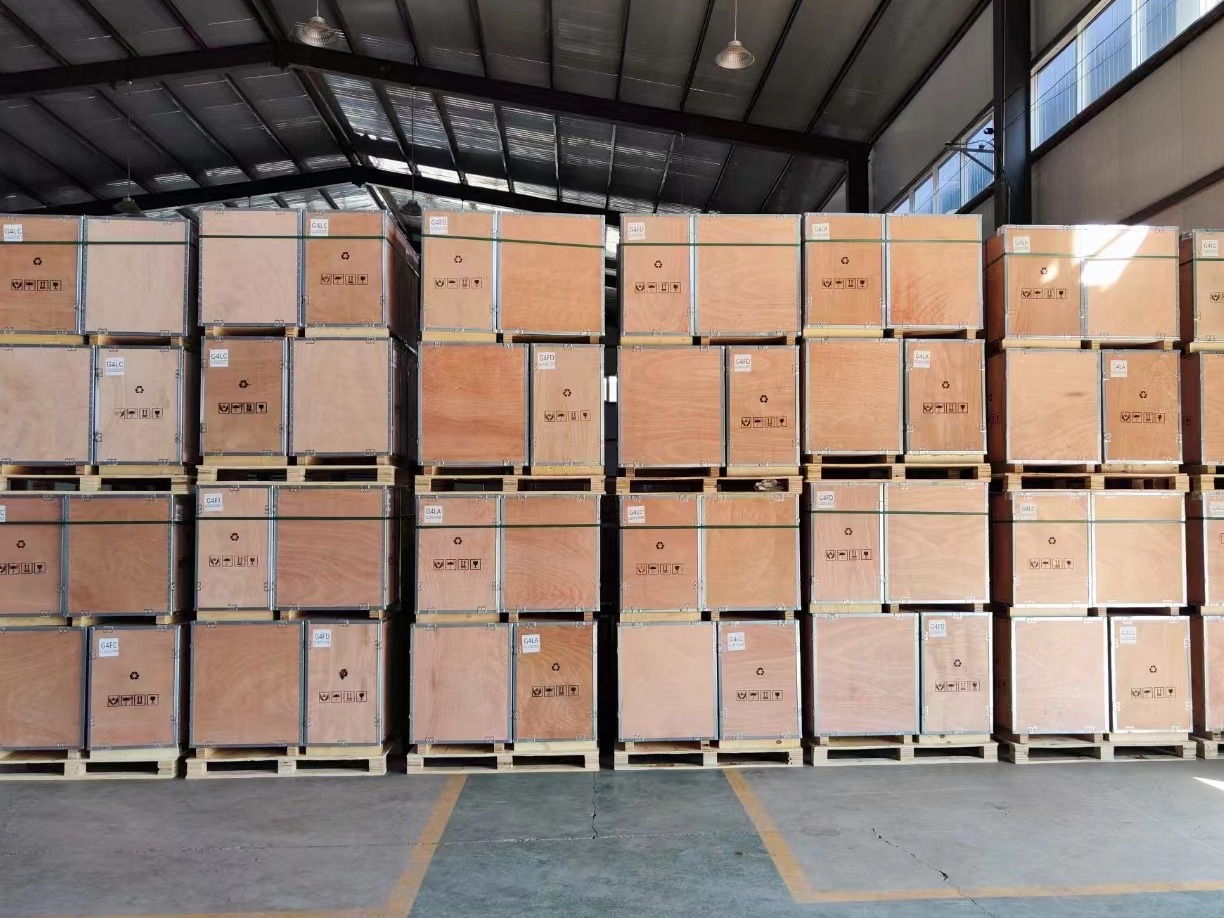
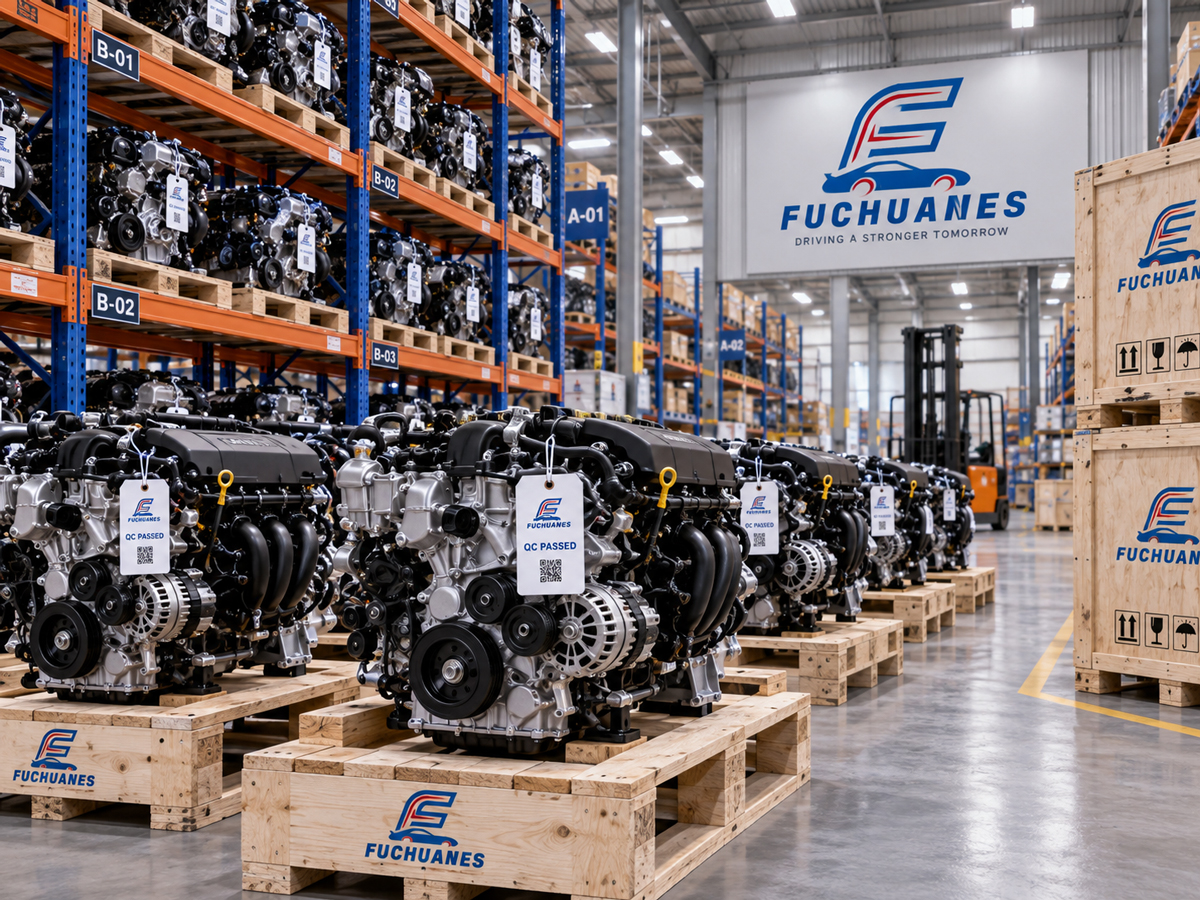
Fuchuan's strength here is a catalog of more than 800 vehicle applications held in stock, covering the engine assemblies that dominate Gulf demand. For Gulf Star, that depth meant consolidation: one supplier, one standard of testing, one warranty, one shipping lane. Consolidation matters more than most distributors realize. Every additional supplier is an additional set of documents, an additional quality variable, and an additional relationship to manage. Moving from five fragmented sources to a single structured one released the management time that Gulf Star then reinvested in actually selling.
Consistency extends to the component level too. A workshop that needs a cylinder head for a Nissan V6 or a cylinder block for a Toyota four-cylinder wants it from the same trusted source that supplied the complete engine last month. When a distributor can bundle complete engines with the turbocharger replacements and component parts its workshops ask for, the average order value rises and the customer's reason to shop elsewhere falls.
Regional Exclusivity: Why Protected Territory Converts
The single biggest unlock for Gulf Star was regional exclusivity. Before the agency, the company had spent years competing against other importers selling engines sourced from the same Chinese factories—often literally the same engines, differentiated only by who was willing to cut price further. That is a race to the bottom, and no distributor wins it in the long run.
An exclusive territory changes the incentives. When Gulf Star knew it was the only authorized agent for its defined region, it became rational to invest: to stock deeper, to build a proper showroom and technical counter, to train its own staff, and to advertise its status locally. Those are investments a distributor will never make in a shared, unprotected market, because the return would be harvested by a competitor down the road. Exclusivity is what turns a transaction into an asset.
It also changed the sales conversation with customers. "We are the authorized agent for Fuchuan engines in this territory" is a materially different proposition from "we can get you an engine." It implies recourse—a place the warranty is actually honored, a person responsible for the product. In a market where workshops have been burned by anonymous gray-market engines, that implied accountability is worth a premium and a repeat order.
Pricing Support and Technical Training: The Margin Multipliers
Two other elements of the program did most of the quiet work: structured pricing and technical training.
Structured pricing gave Gulf Star a tiered schedule that rewards volume, which meant the company could quote its own customers with confidence instead of renegotiating every deal. Margin predictability is the foundation of a scaling business; you cannot plan inventory, hire staff, or extend credit to your own customers if your own cost basis moves every month. A distributor on a transparent tier knows exactly what a container of engines will cost next quarter, and that certainty is itself worth more than a one-time discount.
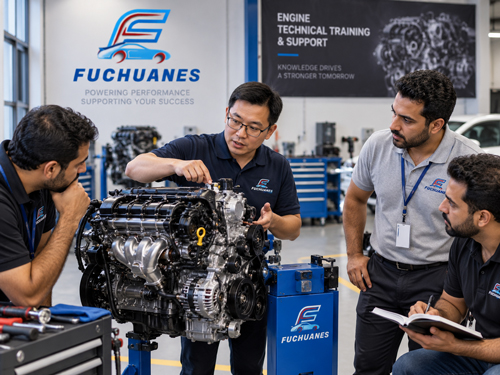
Technical training closed the credibility gap. Gulf Star's sales staff went from "parts people" to people who could explain why a tested, warranted engine is worth more than a cheaper gray-market unit—and, crucially, how to help a workshop diagnose a fitment question or a warranty scenario. Fuchuan provides product training, installation documentation, and direct technical back-up so that a distributor's team never has to bluff an answer. In an industry where trust is the currency, the ability to answer a technical question correctly and quickly is what converts a first order into a permanent account.
These two supports—pricing and training—are where most supplier "partnerships" fail. They are easy to promise and expensive to deliver, which is why a distributor should always test them before committing. The test is simple: ask for the written tier schedule and sit in on a training session. A supplier that will not show you either is offering you a price list, not a partnership.
The Results: From Trader to Engine Business
The outcome for Gulf Star was not magic; it was the compounding of several structural advantages over roughly eighteen months of operating as an authorized agent.
| Metric | Before the Agency | After the Agency |
|---|---|---|
| Sourcing model | Five-plus fragmented suppliers | Single consolidated supplier |
| Pricing basis | Spot-market, negotiated per deal | Structured tiered schedule |
| Territory | Unprotected, shared with competitors | Exclusive regional rights |
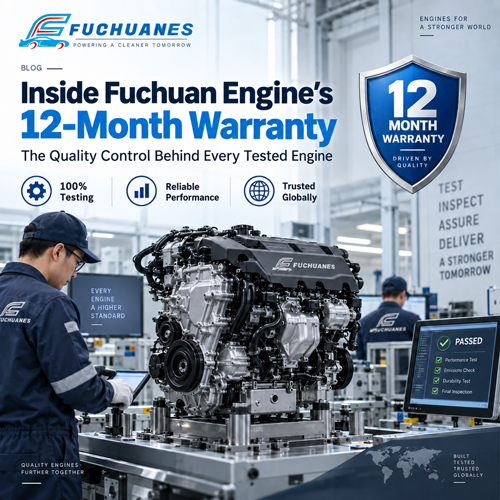
| Warranty support | Inconsistent, no clear owner | 12-month warranty with a named point of contact |
| Staff capability | Order-taking only | Technical-trained, consultative selling |
| Business trajectory | Flat, margin-capped | Triple revenue with rising margin |
The trajectory is the point worth studying. Gulf Star did not grow because the Gulf market suddenly needed more engines; that demand had always been there. It grew because it finally had the terms—territory, pricing, and support—that made capturing that demand worth investing in. The engine business did not change; the distributor's position in it did.
Why the Middle East Rewards the First Mover
It is worth pausing on why this region in particular rewards an engine distributor who commits early. The Gulf's vehicle fleet is young, large, and heavily concentrated in a handful of high-demand platforms—Land Cruiser, Hilux, Patrol, and the mainstream Hyundai and Kia ranges. That concentration means a relatively small catalog covers an outsized share of regional demand, and it means the distributor who secures a consistent, warranted supply of those specific engines captures repeat business that compounds monthly.
Add to that the region's climate, which punishes engines hard. Sustained heat, dust, and long highway runs push cooling systems and rotating assemblies to their limits, so failure rates and replacement demand run higher than in temperate markets. For a distributor, that is not a reason to sell cheap engines—it is a reason to sell reliable, tested, warranted ones, because a workshop in Riyadh that fits a defective engine in July never calls you again. The engine distributor who can guarantee quality in those conditions owns the account.
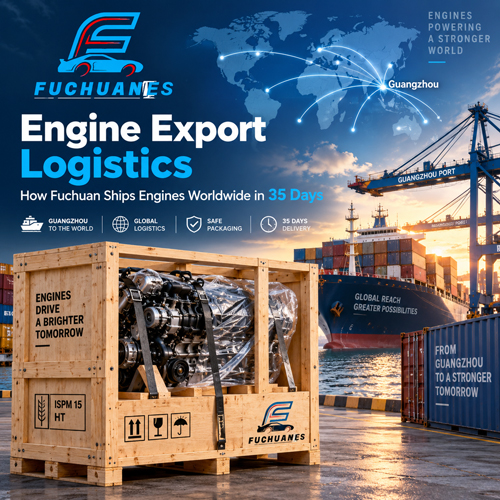
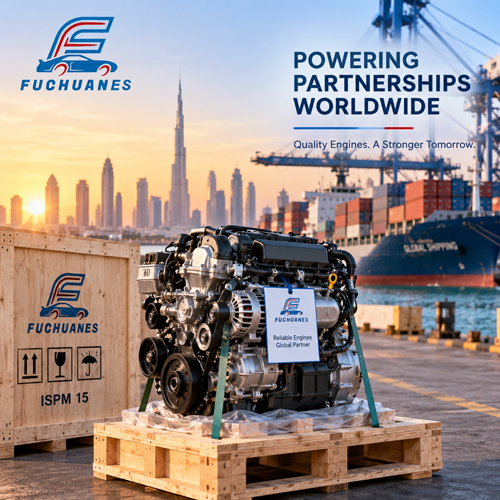
The final factor is logistical. The Gulf sits on major east-west shipping lanes, which keeps ocean freight from China economical and predictable—the same 35-day engine export corridor described in our logistics overview serves the region reliably. That short, dependable supply line is exactly what a distributor needs to hold deep inventory without overcommitting capital. When territory, catalog depth, and a fast shipping lane line up, the region stops being a market you sell into and becomes a market you own. The distributors who recognized this early and locked in their agency terms are now the ones their competitors are chasing.
What This Means for Your Engine Business
If you are an engine distributor evaluating whether an agency program is worth it, the Gulf Star pattern gives you a checklist. First, demand a defined and protected territory; if the supplier will not draw a line on a map, walk away. Second, demand a written pricing tier; predictability is worth more than a cheap first container. Third, demand technical and warranty support with a named human owner, not a generic email address. Fourth, look at catalog depth, because a deep engine catalog is what lets you consolidate sourcing and stop fragmenting your own attention.
Most importantly, test the supplier the way your customers test you. The Gulf Star case, and the broader pattern behind it, is exactly why Fuchuan built the global agent program: regional exclusivity, structured pricing, technical training, and a 12-month warranty as the foundation—because a supplier's growth is downstream of its distributors' growth. Fuchuan also supports OEM/ODM projects, so a distributor that wants to launch its own private-label engine line for its region has a manufacturing path, not just a resale path.
The Gulf is not the only market where this pattern applies. Southeast Asia, Africa, Latin America, and Eastern Europe all show the same dynamic: strong local demand for reliable engines, fragmented supply, and a shortage of distributors who can deliver trust at scale. The distributor that secures territory and support first wins those markets; the ones that wait are left competing on price.
If you want to build an engine business rather than just move engines, start the conversation at Fuchuan Engine. Bring your region, your current volumes, and your ambitions—the team will show you the territory, the pricing, and the support structure, and let you decide whether the numbers make sense. The distributors who scale are the ones who stop asking for a lower price and start asking for a better position.
Engine Export Logistics: How Fuchuan Ships Engines Worldwide in 35 Days
Related Article