Euro 7 Emission Standards and Their Impact on Chinese Engine Exports
The European Union's Euro 7 regulation—formally adopted as Regulation (EU) 2024/1257 and published in April 2024—marks the final iteration of exhaust emission legislation for combustion-engine vehicles in Europe. For Chinese engine manufacturers expanding into global markets, it represents both a compliance hurdle and a strategic inflection point. The regulation phases in from mid-2025 for light-duty type approvals through 2028 for all heavy-duty registrations, tightening pollutant limits, doubling durability requirements, and for the first time regulating non-exhaust sources like brake dust and tyre particles.
China's engine manufacturing sector has grown into a global export force, with leading manufacturers shipping hundreds of thousands of units annually across 150-plus countries. The new regulatory framework means that exporters targeting Europe—or any market that aligns with EU regulations—must now navigate a substantially more demanding compliance landscape. Understanding what changed, what it costs, and how to respond is no longer optional; it is a commercial imperative.
Key Takeaways - Euro 7 light-duty type approvals begin mid-2025; all new light-vehicle registrations must comply by November 2027, with heavy-duty deadlines extending to mid-2028 and beyond - Heavy-duty NOx limits drop 56% from 460 to 200 mg/kWh (WHTC cycle), while ammonia (NH₃) and nitrous oxide (N₂O) face regulatory limits for the first time - Per-vehicle compliance costs range from €150 (EU estimate) to over €2,600 (industry estimate), with heavy-duty trucks facing up to €11,700 in aftertreatment upgrades - China's domestic 6b standard is already stricter than Euro 7 on light-duty NOx (35 vs. 60 mg/km) and PM (3 vs. 4.5 mg/km), but Euro 7 extends coverage to new pollutants and non-exhaust emissions - Market diversification toward Southeast Asia, the Middle East, and Latin America offers near-term revenue stability while long-term technology upgrades proceed
Euro 7 at a Glance: Timeline, Scope, and What Actually Changed
Euro 7 replaces the previous dual-track framework—Euro 6 for light-duty vehicles and Euro VI for heavy-duty—with a single, unified regulation covering all vehicle categories regardless of fuel type. The regulation was published in the EU Official Journal on 24 April 2024 and entered into force twenty days later. Its implementation follows a phased schedule designed to give manufacturers adequate lead time.
For light-duty vehicles (categories M1 and N1), new type approvals under Euro 6 closed on 1 July 2025. All new vehicle types must comply with Euro 7 from 29 November 2026, and every newly registered light-duty vehicle must meet the standard from 29 November 2027. Heavy-duty vehicles (M2, M3, N2, N3) follow on a delayed track: new type approvals are required from mid-2027, with full compliance for all new heavy-duty registrations by mid-2028. Small-volume manufacturers producing fewer than 10,000 units annually receive extended deadlines through July 2030 for cars and July 2031 for heavy-duty vehicles.
What actually changed in the numbers? For light-duty vehicles, the headline exhaust limits—NOx at 60 mg/km for petrol and now 60 mg/km for diesel (down from 80), CO at 1,000 mg/km, and PM mass at 4.5 mg/km—appear broadly similar to Euro 6 at first glance. The real tightening lies elsewhere. Euro 7 lowers the particle number (PN) counting threshold from 23 nanometres to 10 nanometres, capturing ultrafine particles that Euro 6 ignored. It introduces first-ever limits for ammonia (NH₃) and, for heavy-duty vehicles, nitrous oxide (N₂O) at 200 mg/kWh and methane (CH₄) at 500 mg/kWh. Brake particulate emissions are capped at 7 mg/km for internal combustion vehicles—a regulation that, notably, also applies to electric vehicles.
Perhaps the most consequential change is durability. Euro 6 required emissions control systems to maintain compliance for 5 years or 100,000 km. Euro 7 doubles that to 10 years or 200,000 km for light-duty vehicles, with heavy-duty systems required to last 700,000 km or 15 years. Real Driving Emissions (RDE) testing conditions also expand significantly, covering temperatures from −10°C to +45°C, altitudes up to 1,600 metres, cold starts, short urban trips, and trailer towing scenarios. Meeting 60 mg/km NOx in a laboratory is one challenge; sustaining it during a cold start at sub-zero temperatures on an alpine pass is quite another.

The Impact on Chinese Engine Exporters: Costs, Categories, and Compliance Gaps
Not all engines face the same exposure. Diesel heavy-duty powertrains bear the brunt of Euro 7's tightening, because the heavy-duty NOx limit plunges from 460 to 200 mg/kWh on the WHTC cycle—a 56% reduction—and CO limits on the same cycle drop 62% from 4,000 to 1,500 mg/kWh. For Chinese manufacturers of engine assemblies targeting European commercial vehicle markets, this means wholesale aftertreatment system redesigns, not incremental tweaks.
Gasoline direct injection (GDI) passenger car engines face a different but equally significant challenge. The PN10 threshold—counting particles down to 10 nanometres—effectively makes gasoline particulate filters (GPF) mandatory for all GDI engines, whereas Euro 6 allowed some port-fuel-injection engines to escape particulate filtering entirely. Additionally, the new ammonia limit requires SCR-equipped vehicles to incorporate ammonia slip catalysts downstream, adding cost and complexity to systems that were already sophisticated.
The financial implications are substantial and hotly debated. The European Commission estimated compliance costs at approximately €150 per passenger car and €2,600 per bus or truck. Industry research commissioned by ACEA and conducted by Frontier Economics painted a far starker picture: €1,862 per gasoline passenger car, €2,629 per diesel vehicle, and up to €11,707 per heavy-duty truck or bus. More recent assessments from 2025–2026 have settled on a middle ground of £300 to £1,500 per light-duty vehicle, with heavy-duty costs remaining significantly higher. A 3.5% fuel economy penalty—caused primarily by the energy demands of heating catalytic converters from cold starts—adds lifetime operating costs of approximately €650 for passenger vehicles and up to €20,000 for long-haul trucks.
For the engine export China sector, these numbers translate into concrete strategic decisions. Exporters must determine which product lines can be economically upgraded to Euro 7, which should be redirected to markets with less stringent requirements, and where to invest in R&D for next-generation aftertreatment architectures. The compressed compliance timeline—heavy-duty manufacturers have roughly two years from the regulation's entry into force to prepare new type approvals—leaves little room for procrastination. Cylinder head and cylinder block designs may need revision to accommodate integrated aftertreatment packaging, while turbocharger sizing must account for the broader operating range demanded by expanded RDE testing conditions.

Bridging the Regulatory Gap: Domestic Standards Versus Euro 7
A common misconception holds that Euro 7 is uniformly stricter than China's domestic emission standards. The reality is more nuanced—and for Chinese manufacturers, surprisingly encouraging on certain metrics.
China 6b, fully implemented nationwide since July 2023, imposes some of the world's tightest light-duty emission limits: NOx at 35 mg/km, PM mass at 3.0 mg/km, NMHC at 35 mg/km, and CO at 500 mg/km. Compare these to Euro 7's light-duty figures—NOx at 60 mg/km, PM at 4.5 mg/km, CO at 1,000 mg/km—and the Chinese domestic standard is demonstrably stricter on every conventional pollutant for passenger cars. China accomplished in 22 years what Europe took 30 years to achieve, and the domestic framework has effectively leapfrogged Euro 6 on key metrics.
However, Euro 7 extends its regulatory reach into territory that China's current standard does not cover. The EU regulation introduces first-ever limits for ammonia, nitrous oxide, and methane on heavy-duty vehicles—pollutants that the Chinese 6b regulation leaves unregulated or addresses only through advisory thresholds. Euro 7's brake particle limit (7 mg/km for ICE vehicles, 3 mg/km for EVs) and forthcoming tyre abrasion limits have no equivalent in the Chinese framework. The doubled durability requirement—10 years or 200,000 km versus the domestic standard's 5 years or 160,000 km—also demands more robust aftertreatment hardware and more sophisticated onboard diagnostics.
For heavy-duty vehicles, the comparison shifts. Euro 7 sets NOx at 200 mg/kWh (WHTC cycle), while the Chinese standard's real-world equivalent hovers around 260 mg/kWh. Euro 7's CO limit of 1,500 mg/kWh on the WHTC cycle is far more aggressive than the domestic 4,000 mg/kWh. The gap narrows on PM—Euro 7 at 8 mg/kWh versus 10 mg/kWh—but Euro 7's 25% reduction in particle number limits and its new NMOG framework replacing THC add further compliance dimensions.
The practical takeaway for Chinese exporters is that meeting domestic standards does not automatically confer Euro 7 compliance, despite China's stricter limits on certain conventional pollutants. The additional Euro 7 requirements—ammonia slip control, N₂O regulation, brake particle management, doubled durability, and expanded RDE testing conditions—necessitate targeted engineering investments beyond what domestic compliance already demands. China's forthcoming National 7 standard, currently in pre-research with expected formulation completion around 2026–2027, is widely expected to align more closely with the Euro 7 framework, potentially easing this divergence in the longer term.

Strategic Responses: Technology Upgrades and Market Diversification
Chinese engine manufacturers are pursuing a two-track strategy: technology upgrades for markets demanding Euro 7 compliance, and market diversification toward regions with lower regulatory thresholds.
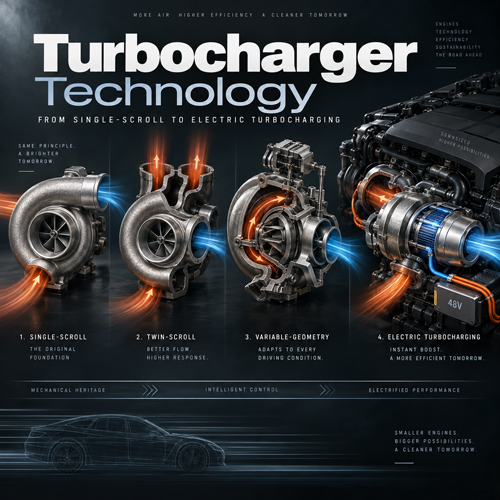
Technology Upgrade Paths. The core engineering responses to Euro 7 cluster around three aftertreatment technologies. First, gasoline particulate filters are becoming standard on all GDI engines to meet the PN10 threshold. Close-coupled GPF placement—positioning the filter nearer the engine outlet—ensures rapid light-off temperatures during cold starts, which Euro 7's expanded RDE testing now scrutinises. Second, advanced SCR systems with integrated ammonia slip catalysts address both the tightened NOx limits and the new NH₃ cap. Dual-layer catalyst coatings, combining Cu-SCR and Fe-SCR configurations, enable high NOx conversion while keeping ammonia slip below the regulatory ceiling across the full real-driving temperature range. Third, EGR (exhaust gas recirculation) optimisation reduces engine-out NOx, lessening the burden on downstream aftertreatment. Cylinder head modifications to accommodate revised EGR passages and combustion chamber geometries are a common starting point for these upgrades.
Onboard monitoring (OBM) systems represent an additional requirement. Euro 7 mandates real-time emission surveillance throughout the vehicle's life, with data reported over-the-air for regulatory compliance and to trigger driver warnings when limits are exceeded. This necessitates sensor integration, data logging architecture, and secure telematics—capabilities that extend well beyond traditional engine manufacturing.
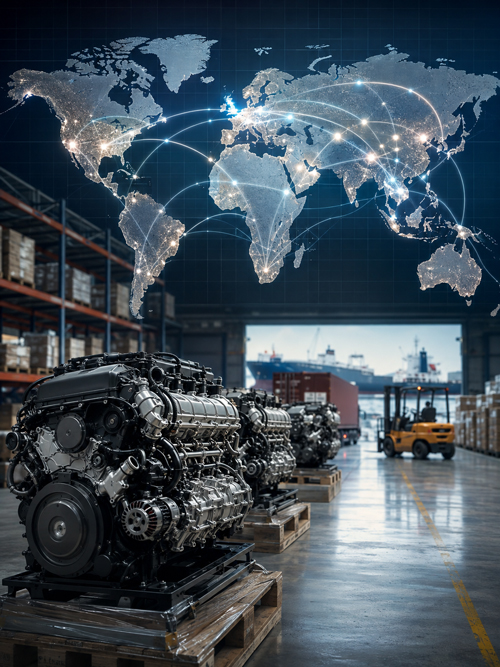
Market Diversification. While Euro 7 compliance work proceeds, many Chinese manufacturers are accelerating exports to regions where Euro II through Euro V standards remain the regulatory baseline. Southeast Asia, the Middle East, Africa, and Latin America collectively represent enormous demand for commercial vehicle and industrial engines at emission tiers well below Euro 7. Industry data shows that small-to-medium diesel engines in the 20–50 kW range—the sweet spot for agricultural and construction machinery across these regions—are growing at approximately 8.7% annually. Leading Chinese manufacturers have already established regional service centres, local assembly partnerships, and warehouse networks in Thailand, Vietnam, Indonesia, and the United Arab Emirates, reducing delivery times from 45 days to under two weeks and significantly improving customer retention.
This dual approach—upgrading for the future while capitalising on accessible markets today—provides revenue stability during the Euro 7 transition. The strategy also positions Chinese exporters to capture market share in transitional economies where emission standards will inevitably tighten over the coming decade, creating a natural upgrade path from Euro III/IV products today to Euro VI and Euro 7-ready platforms tomorrow.

How Fuchuan Engine Prepares Clients for the Euro 7 Transition
Navigating the Euro 7 transition requires more than theoretical knowledge—it demands practical engineering capability, flexible manufacturing, and a partner who understands both the regulatory landscape and the commercial realities of global engine trade. Fuchuan Engine has positioned itself at precisely this intersection.
Our approach begins with product readiness. Fuchuan's engine assemblies are engineered to accommodate the aftertreatment system packaging that Euro 7 compliance demands—whether that means integrated GPF mounting for gasoline platforms, SCR with ammonia slip catalyst provision for diesel applications, or EGR-optimised combustion architectures that reduce engine-out emissions before aftertreatment even begins. Our OEM/ODM services allow clients to specify emission-tier configurations tailored to their target markets, from Euro III for cost-sensitive regions to Euro 7-ready platforms for European-bound shipments.
We recognise that compliance is not a one-time certification event but a lifecycle commitment. Euro 7's doubled durability requirements mean that the components we manufacture—from precision-machined cylinder blocks to high-temperature cylinder heads and optimised turbocharger assemblies—must maintain dimensional stability and performance characteristics across 200,000 km or 10 years of service. Our quality control processes, material selection standards, and testing protocols are calibrated to these extended service intervals.
For clients exploring new markets, our global agent network provides local market intelligence, regulatory guidance, and after-sales support across multiple regions. Whether you are a European importer seeking Euro 7-compliant powertrains, a Southeast Asian distributor evaluating Euro III/IV options, or a global OEM looking for a flexible manufacturing partner, Fuchuan Engine offers the technical depth and commercial agility to keep your supply chain moving.
Ready to navigate the Euro 7 transition with confidence? Contact our engineering team directly through our global agent network to discuss your emission compliance requirements, or explore our OEM/ODM services to discover how our expertise can keep your business ahead of the regulatory curve.
2026 Global Automotive Engine Market: Size, Trends, and Regional Demand Shifts
Related Article