2026 Global Automotive Engine Market: Size, Trends, and Regional Demand Shifts
The global automotive engine market continues to demonstrate remarkable resilience in 2026, even as the transportation industry navigates the dual pressures of electrification and tightening emission regulations. According to recent market research, the worldwide automotive engine market was valued at approximately USD 105–107 billion in 2025 and is projected to reach USD 131–135 billion by 2032, growing at a compound annual growth rate (CAGR) of 2.5–3.3%. These figures underscore a fundamental truth: the automotive engine market remains a critical pillar of global mobility, and global engine demand is not collapsing — it is transforming. For engine industry trends watchers, 2026 marks a pivotal year where traditional combustion engineering and hybrid-compatible powertrain strategies converge, creating new opportunities for manufacturers and suppliers who can adapt to shifting regional demand patterns.
Market Overview: Global Engine Market Size in 2026
Current Market Valuation
The automotive engine market entered 2026 with a valuation of approximately USD 108–110 billion, building on a steady recovery trajectory from the supply chain disruptions of the early 2020s. Multiple research firms converge on slightly different figures, but the consensus points to sustained growth:
| Metric | Value |
|---|---|
| 2025 Market Size | USD 105.45–107.47 billion |
| 2026 Market Size | USD 107.97–110.2 billion |
| 2032/2034 Projection | USD 131.91–134.69 billion |
| CAGR (2025–2032) | 2.54–3.25% |
| Largest Region | Asia Pacific (46.8–49.95%) |
Fuel Type Breakdown
Gasoline engines continue to dominate the market, accounting for approximately 69.1% of global share in 2025, generating roughly USD 72.9 billion in revenue. Diesel engines hold the second position at about 25.8%, while alternative-fuel engines — including hydrogen-ready and natural gas platforms — represent a growing 5% slice. This distribution reflects the practical reality that gasoline powertrains remain the volume backbone for passenger vehicles globally, while diesel retains strategic importance in commercial and heavy-duty applications.
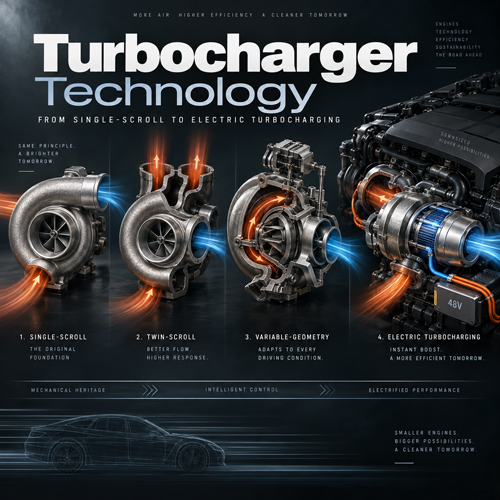
The persistence of these figures challenges the narrative that internal combustion engines are facing imminent obsolescence. Instead, engine industry trends point toward optimization — manufacturers are investing in turbocharging, direct injection, variable valve timing, and Miller/Atkinson cycle combustion to squeeze greater efficiency from existing architectures.
Key Engine Industry Trends Shaping 2026
1. Engine Downsizing and Turbocharger Integration
Approximately 61% of new passenger vehicle platforms now incorporate downsized engine technologies — smaller displacement blocks paired with turbochargers to maintain performance while reducing fuel consumption and emissions. This trend directly benefits suppliers who specialize in turbocharger manufacturing and engine components engineered for high-pressure, high-temperature environments. If you are sourcing turbocharger components, Fuchuan Engine's turbocharger replacement program offers validated units for a wide range of vehicle applications.
2. Hybrid-Compatible Engine Platforms
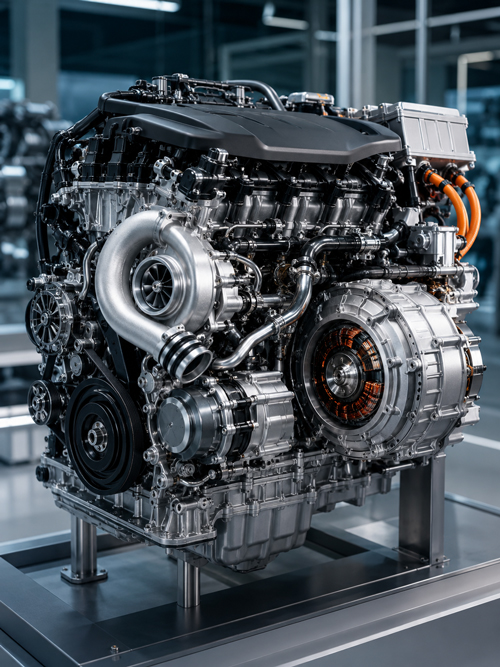
Nearly 49% of global automotive manufacturers have expanded investments in engines designed to work within electrified powertrains. Hybrid electric vehicles (HEVs) and plug-in hybrids (PHEVs) require internal combustion engines that can operate at optimized load points, shut down during regenerative braking, and restart seamlessly. This has driven demand for engines with integrated starter-generators, improved thermal management, and enhanced start-stop durability.
3. Advanced Combustion Technologies
Engineers are pushing thermal efficiency boundaries through:
- High-pressure direct injection (up to 350 bar)
- Miller and Atkinson cycle valve strategies
- Cylinder deactivation systems
- Variable compression ratio designs
- Advanced exhaust gas recirculation (EGR)
- Gasoline particulate filters (GPF)
These technologies require precision-machined cylinder heads and engine blocks capable of withstanding higher cylinder pressures and thermal loads — a capability that established manufacturers like Fuchuan Engine have developed over a decade of production experience.
4. AI and Digital Diagnostics
More than 54% of engine manufacturers are incorporating sensor-based monitoring systems powered by artificial intelligence. These systems enable predictive maintenance, optimize combustion calibration across thousands of operating conditions, and detect machining defects during production. Connected engine data is transforming how fleet operators manage maintenance schedules, reducing downtime and extending engine lifecycle performance.
5. Alternative Fuels and Hydrogen Readiness
Engine manufacturers are increasingly developing hydrogen-ready internal combustion engines and synthetic fuel-compatible platforms. China, in particular, is exploring substitute fuels including hydrogen and synthetic fuels to preserve ICE technology while meeting carbon reduction targets. This diversification ensures that combustion engineering expertise remains relevant even as battery electric vehicles gain market share.
Regional Demand Analysis: Where Engine Growth Is Happening
Asia Pacific: The Undisputed Leader
Asia Pacific dominated the global automotive engine market in 2025, capturing approximately USD 49.3 billion and 46.8–49.95% of total revenue. Several factors drive this dominance:
- China produced approximately 26.9 million vehicles in 2025, with internal combustion engines powering an estimated 76% of new production. China is advancing a dual pathway: aggressive electrification alongside continued refinement of efficient ICE platforms for hybrids, range-extenders, and commercial transport.
- India produced 4.2 million vehicles annually, with diesel engines commanding 51% of the utility vehicle and commercial truck market. The country's growing freight transport sector, powered by diesel trucks and three-wheelers, continues to expand with e-commerce logistics growth.
- Japan and South Korea maintain significant ICE production for domestic hybrid vehicles and export to Southeast Asian and African markets where EV adoption timelines remain extended.
Southeast Asia: The Emerging Growth Engine
The Southeast Asian market — particularly Indonesia, Thailand, and Vietnam — is emerging as a secondary growth engine for the automotive engine market. Expanding two-wheeler and commercial vehicle fleets remain heavily reliant on gasoline and diesel powertrains. Indonesia's industrial power generation capacity expansion is also sustaining demand for diesel generator sets. For suppliers looking to serve this growing market, establishing regional distribution through an authorized agent program can provide a strategic foothold.
Middle East and Africa: Premium and Power Generation Demand
The Middle East and Africa region contributed approximately USD 4.2–18.4 billion in 2025, depending on market definition, accounting for 4–6.26% of the global market. The Middle East is characterized by strong demand for premium and high-performance vehicles — countries like the UAE, Saudi Arabia, and Qatar are known for their luxury car markets. Meanwhile, Sub-Saharan Africa, where grid electrification rates in rural areas remain below 40%, represents one of the most consistent long-term growth areas for diesel generators and small gasoline engines.
Latin America: Flex-Fuel and Commercial Demand
Latin America captured approximately USD 7.4–14.4 billion in 2025, representing 4.9–7% of the global market. Brazil's sugarcane ethanol industry supports a unique flex-fuel engine ecosystem that is expected to expand as low-carbon liquid fuel mandates tighten. Mexico's automotive manufacturing capacity reached 3.8 million units by 2025, with major OEMs maintaining significant assembly operations producing vehicles with standardized engine platforms. The region shows continued relevance for flex-fuel engine technologies, particularly ethanol-compatible platforms.
Europe: Regulatory Pressure Driving Innovation
Europe held 22.7–26.4% of the global market in 2025, valued at approximately USD 23.9–59 billion. The Euro 7 emission standards, entering into force for new type approvals in November 2026, mandate particulate matter levels below 3.5 milligrams per test and NOx emissions capped at 35 milligrams per kilometer for light-duty vehicles. These regulations are compelling engine manufacturers to adopt advanced fuel injection technologies and exhaust aftertreatment systems. Germany, Europe's largest automotive producer, manufactured 3.7 million vehicles in 2025 with ICEs powering 68% of output.
North America: Trucks and SUVs Sustain Demand
North America contributed 19.5–27.4% of global market value in 2025. The United States produced 10.5 million light-duty vehicles, with gasoline engines powering 87% of volume. Diesel engines serve premium pickup trucks and commercial applications — Ford Super Duty with Power Stroke, Chevrolet Silverado with Duramax. The region's strong demand for pickup trucks, SUVs, and heavy-duty applications sustains investment in turbocharged gasoline engines and diesel efficiency improvements.
The EV Impact: Coexistence, Not Replacement
One of the most discussed engine industry trends is the impact of electric vehicle adoption on traditional engine demand. The reality is more nuanced than headlines suggest:
- Nearly 44% of vehicle manufacturers are increasing investment in battery technologies, which affects long-term ICE development budgets.
- However, approximately 49% of global OEMs are also expanding investments in hybrid-compatible engines, recognizing that HEV and PHEV platforms bridge the transition.
- Commercial transport, agriculture, construction, and long-haul applications continue to demand durable combustion engines where charging infrastructure, duty-cycle requirements, and total cost of ownership favor liquid fuels.
- In developing nations, the expansion of commercial vehicle fleets and the integration of ICEs into hybrid powertrain architectures are driving sustained volume.
The internal combustion engine is not being replaced — it is being re-engineered. Manufacturers who can deliver efficient, reliable, and emissions-compliant complete engine assemblies are well-positioned to serve both traditional and hybrid powertrain markets through the 2030s.
What This Means for Engine Buyers and Distributors
For Procurement Professionals
The evolving market landscape creates both challenges and opportunities for engine procurement:
- Supply diversification — Relying on a single region or manufacturer increases risk. Diversifying supply across established manufacturers in China, Southeast Asia, and other growing regions can improve resilience.
- Technology alignment — Ensure your engine suppliers offer downsized, turbocharged, and hybrid-compatible platforms that meet current and future regulatory requirements.
- Quality assurance — With stricter emissions standards, 100% product testing and quality control are non-negotiable. Look for suppliers with comprehensive testing protocols and strong warranty commitments.
- OEM/ODM capabilities — As engine specifications become more specialized, the ability to customize engines through OEM/ODM services becomes a significant competitive advantage.
For Distributors and Agents
The shifting regional demand patterns create opportunities for established distribution networks:
- Southeast Asia and the Middle East represent high-growth markets with increasing infrastructure investment.
- Latin America's flex-fuel ecosystem offers unique opportunities for ethanol-compatible engine supply.
- The Africa market, while smaller, shows consistent long-term growth potential for both automotive and stationary power engines.
Building a regional distribution business requires reliable supply, technical support, and competitive pricing — attributes that established manufacturers can provide through dedicated agent partnership programs.
Supply Chain and Manufacturing Considerations
The automotive engine supply chain has faced significant disruption and restructuring since 2020. In early 2026, U.S. tariffs on steel and aluminum imports — set at 25% with escalations to 50% for derivatives — increased input costs for engine block, cylinder head, and related component production. Energy volatility in Europe similarly affected primary production costs. These pressures have prompted engine manufacturers to diversify sourcing, optimize material usage through lightweight aluminum alloys, and invest in regional manufacturing hubs closer to end markets.
For engine buyers, supply chain resilience means working with suppliers who maintain deep inventory, established logistics networks, and proven export capabilities. Manufacturers with 800+ engine models in stock and experience shipping to global markets can significantly reduce procurement lead times and mitigate disruption risks.
Future Outlook: 2027 and Beyond
Looking ahead, the automotive engine market is projected to grow from USD 108 billion in 2026 to approximately USD 132–135 billion by 2032–2034. Key factors that will shape this trajectory include:
- Regulatory evolution: Euro 7 implementation in Europe and equivalent standards in other regions will continue driving technology investment.
- Hybrid adoption: As HEV and PHEV volumes grow, demand for specialized combustion engines optimized for hybrid integration will increase.
- Emerging market motorization: Rising vehicle ownership in developing economies will sustain engine volume even as developed markets shift toward electrification.
- Alternative fuel development: Hydrogen combustion engines and synthetic fuels may extend the relevance of ICE technology well beyond current projections.
Conclusion
The 2026 global automotive engine market tells a story of adaptation rather than decline. With a market value exceeding USD 108 billion and steady projected growth through 2032, internal combustion engines — particularly those optimized for efficiency, hybrid compatibility, and emissions compliance — remain essential to global mobility. Regional demand shifts toward Southeast Asia, the Middle East, and Latin America are creating new opportunities for manufacturers and distributors who can deliver quality engines at competitive prices.
For buyers seeking a reliable engine supplier with 800+ engine models in inventory, OEM/ODM customization capabilities, and 100% product testing backed by a 12-month warranty, Fuchuan Engine offers a comprehensive solution. Explore our engine catalog or learn about becoming an authorized global distributor to capitalize on the growing global engine demand.
Turbocharger Technology: From Single-Scroll to Electric Turbocharging
Euro 7 Emission Standards and Their Impact on Chinese Engine Exports
Related Article