The Prince of Performance: Why the BMW N14B16A Remains the King of the Compact Hot-Hatch
author: Ailsa Lee
2026-04-25

Introduction: The Legendary BMW N14B16A – A Prince Among Compact Performance Engines
In the world of compact performance cars, few engines have achieved the legendary status of the BMW N14B16A. Developed as part of the renowned "Prince" engine family—a collaborative effort between BMW and the PSA Group—this 1.6-liter turbocharged inline-four redefined expectations for small-displacement powerplants. Produced at BMW’s Hams Hall plant in England from 2006 to 2010, the BMW N14B16A engine brought European engineering sophistication to the hot-hatch segment, delivering a driving experience that remains highly sought after in today’s enthusiast market.
Technical Specifications: Small Displacement, Big Ambition
At its heart, the N14B16A is a 1.6-liter (1598 cc) DOHC 16-valve engine featuring an aluminum block and cylinder head for optimal weight reduction. The engine’s standout feature is its BorgWarner K03 turbocharger, which enables impressive output figures: 174 horsepower at 5,500 rpm and 240 Nm of torque available from just 1,600 rpm. This broad torque curve gives the engine exceptional flexibility, delivering responsive performance whether navigating city streets or attacking mountain passes.
The N14B16A engine incorporates BMW’s Valvetronic variable valve lift system and Vanos variable camshaft timing on the exhaust side, technologies that optimize both power delivery and fuel efficiency. With a compression ratio of 10.5:1 and direct fuel injection, the N14B16A achieves a balance of performance and economy that was truly ahead of its time.

Primary Advantages: Why Enthusiasts Seek It Out
The N14B16A's greatest asset is its remarkable power-to-displacement ratio. Extracting 174 horsepower from just 1.6 liters represented a significant achievement in the mid-2000s, and the engine's architecture readily supports aftermarket tuning. A simple software remap can push output to approximately 210-220 horsepower, while enthusiasts pursuing higher performance often upgrade to the larger John Cooper Works (JCW) turbocharger, which can yield outputs exceeding 200 horsepower with supporting modifications.
The BMW N14B16A's compact dimensions also contributed to exceptional chassis dynamics. Its small size allowed engineers to position it low and far back in the engine bay, providing the low center of gravity and near-50/50 weight distribution that made the second-generation Mini Cooper S a handling benchmark.
Vehicle Applications: Where to Find the N14B16A
The N14B16A engine powered some of the most beloved compact performance cars of its era. Primary applications include:
-
Mini Cooper S (R56 Hatch): 2006-2010
-
Mini Cooper S Clubman (R55): 2007-2010
-
Mini Cooper S Cabrio (R57): 2009-2010
-
Mini John Cooper Works (JCW): Higher-output variant producing up to 208 horsepower
The N14B16A engine was also utilized in BMW-badged vehicles including the 1 Series (116i, 118i) and certain 3 Series (316i) models for European markets, though the Mini applications remain the most celebrated among enthusiasts.
Common Faults and Maintenance Solutions
Like any high-performance engine, the N14B16A has specific maintenance requirements that informed owners address proactively. Understanding these issues is key to enjoying long-term reliability.
-
Timing Chain System: The chain tensioner has a modest service life—often requiring attention by 50,000 miles—and failure can lead to catastrophic engine damage. Solution: Proactive replacement of the timing chain tensioner and guides every 50,000-60,000 miles is strongly recommended.
-
Carbon Buildup: Direct injection leads to carbon buildup on intake valves, as fuel never washes over them. This manifests as rough idle, reduced power, and increased fuel consumption. Solution: Professional walnut blasting every 40,000-50,000 miles restores lost performance.
-
Oil Consumption: Oil consumption is another notable characteristic, with some engines consuming 0.5-1 liter per 1,000 kilometers. Solution: Adhering to strict 5,000-mile oil change intervals using high-quality synthetic oil (5W-30) and regularly checking oil levels prevents premature wear.
-
Other Common Issues: Additional common issues include high-pressure fuel pump failure, thermostat housing leaks, and vacuum pump deterioration. Solution: Using OEM or high-quality aftermarket replacement parts and maintaining vigilant cooling system health will prevent most major failures.

Global Market Demand and Future Prospects
Despite being superseded by BMW's N13 and B38 modular engines in 2012, the BMW N14B16A engine is experiencing a significant renaissance in the global market. In Europe, demand for well-maintained examples remains strong as drivers seek engaging, lightweight performance cars that modern vehicles rarely replicate. The United States aftermarket community has embraced the engine as a tuning platform, with extensive parts availability from both OEM suppliers and performance manufacturers.
The N14B16A's future looks bright for several reasons. First, the growing trend of restoring analog-era performance cars has elevated demand for clean, unmodified examples. Second, the engine's robust architecture supports modern tuning approaches, including standalone ECU conversions that unlock additional potential. Third, the engine's presence in motorsports—particularly the Mini Challenge series—ensures continued development and parts support.
For the discerning buyer seeking entry into premium European performance motoring, the BMW N14B16A offers an unmatched combination of heritage, tunability, and driving engagement. While it demands respect through disciplined maintenance, the reward is a visceral driving experience that modern turbocharged engines often fail to replicate. The Prince engine family may have been designed as BMW's answer to small-displacement performance, but the N14B16A has proven itself a king among enthusiasts.

Commercial Vehicle Fleet: V8 vs. V6 Engine Efficiency Comparison and Total Cost of Ownership (TCO) Analysis
Globally Trusted, Classic Renewed – Brand New Volkswagen EA211 1.6L CWVA Automotive Engine
Related Article
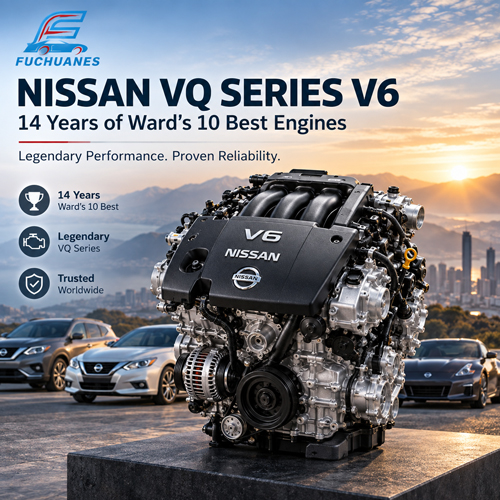
Explore the Nissan VQ engine, the legendary V6 engine that won Ward's 10 Best for 14 straight years. Source tested, warranted VQ units from Fuchuan Engine.
Nissan VQ Series V6: How a Naturally Aspirated Engine Dominated Ward's 10 Best for 14 Straight Years
Answers to top engine buyer questions: engine MOQ, engine shipping time, engine payment terms, sample orders, warranty, and after-sales. Contact Fuchuan.
Engine Purchasing FAQ: MOQ, Lead Time, and Payment Terms Explained