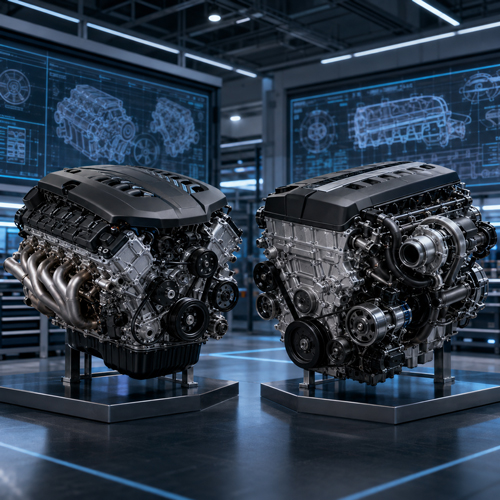
Commercial Vehicle Fleet: V8 vs. V6 Engine Efficiency Comparison and Total Cost of Ownership (TCO) Analysis
author: Vicky Wong
2026-05-07

The Mechanical Trade-off – Power vs. Efficiency
In the competitive landscape of commercial logistics, the engine is more than just a component—it is the primary driver of a fleet’s operational economy. Commercial fleet engines form the backbone of logistics efficiency, and understanding the differences between V6 and V8 configurations is critical for fleet managers aiming to balance performance and cost.
Chapter 1 explores the fundamental mechanical trade-offs between these two engine architectures. It analyzes how their physical designs dictate performance and fuel behavior in professional environments, with a specific focus on V8 engine efficiency and how it compares to V6 counterparts in real-world fleet operations.
Defining the Architecture: Displacement and Friction
The core distinction between commercial fleet engines lies in their geometry and moving mass. A V6 engine, which features two banks of three cylinders, is inherently more compact and lighter.
From a mechanical perspective, fewer cylinders mean reduced internal friction and lower pumping losses. This makes the V6 an agile choice for modern chassis designs—where weight distribution and engine bay space are at a premium—especially for light-duty commercial fleet engines used in urban settings.
Conversely, a V8 engine uses four cylinders per bank. This design delivers a naturally balanced firing order, resulting in superior smoothness and power density—key factors in V8 engine efficiency for heavy-duty applications.
However, the additional pistons, valves, and bearings increase the total surface area subject to friction. While this traditionally meant higher fuel consumption, it also creates a robust platform capable of higher displacement without the extreme stress levels seen in smaller engines. This makes V8s a reliable option for commercial fleet engines tasked with heavy loads.
Horsepower vs. Torque: The Commercial Load Factor
For fleet operators, horsepower sells vehicles—but torque moves loads. This is a critical consideration when evaluating commercial fleet engines and their suitability for specific duties.
The balance between V8 vs V6 fuel economy and power output directly impacts operational efficiency, making it a key factor in fleet decision-making.
The V8 Advantage: Historically, the V8 has been the gold standard for heavy-duty towing among commercial fleet engines. Its ability to generate high torque at low RPMs allows a fully laden vehicle to reach cruising speeds with minimal strain on the drivetrain.
This reduces unnecessary stress on components, ultimately enhancing V8 engine efficiency in high-demand scenarios.
The V6 Evolution: The rise of forced induction (turbocharging) has allowed modern V6 commercial fleet engines to mimic the torque curves of larger V8s. While this approach is effective, these "downsized" engines often operate at higher internal pressures.
This can impact long-term thermal management under constant 100% load cycles, potentially offsetting V8 vs V6 fuel economy advantages in heavy-duty use cases.
Fuel Consumption Profiles: Urban vs. Long-Haul
Efficiency is not a fixed number—it varies based on the duty cycle. This is especially true for commercial fleet engines, where V8 vs V6 fuel economy performance shifts dramatically depending on operating conditions.
Understanding these variations is key to maximizing V8 engine efficiency and overall fleet profitability.
Urban Logistics (V6): In stop-and-go city traffic, the V6 is the clear winner among commercial fleet engines. Its lower rotational inertia and smaller displacement mean less fuel is wasted during idling and frequent acceleration phases.
This delivers superior V8 vs V6 fuel economy in urban environments, making V6s ideal for city-based routes.
Regional & Long-Haul (V8): Paradoxically, a V8 can be more efficient than a V6 when hauling maximum payloads over long distances. This highlights the nuanced nature of V8 engine efficiency.
A small engine working at its absolute limit will often consume more fuel than a larger engine operating at a relaxed 30% capacity. This concept—known as "Engine Stress Mapping"—is vital for fleet managers: an under-stressed V8 often yields a more stable fuel-burn rate in mountainous or heavy-cargo routes, making it a top choice for long-haul commercial fleet engines.
Choosing between a V6 and V8 is a strategic decision for commercial fleet engines, rooted in balancing Power Density vs. Mechanical Simplicity. The V6 offers a lightweight, high-efficiency solution for lighter duties, while the V8 remains the titan of durability for high-demand operations.
Understanding these mechanical nuances is the first step in calculating the true Total Cost of Ownership (TCO)—especially when evaluating V8 engine efficiency and V8 vs V6 fuel economy.
Total Cost of Ownership (TCO) Deep Dive
In the second phase of our analysis, we move beyond mechanical specs to the financial heartbeat of fleet management: Total Cost of Ownership (TCO). For commercial fleet engines, TCO is directly influenced by three key factors: V8 engine efficiency, V8 vs V6 fuel economy, and long-term durability.
In 2026, with vehicle acquisition prices hovering 30% higher than pre-2020 levels and maintenance inflation outpacing general CPI, a detailed TCO breakdown is no longer optional—it is a survival requirement for fleet managers tasked with optimizing commercial fleet engines.
Acquisition and Depreciation: The "Front-End" Capital
The initial purchase price of a V8-powered fleet vehicle typically commands a 5% to 12% premium over its V6 counterpart. This is an important consideration when budgeting for commercial fleet engines.
However, this upfront cost must be weighed against 2026’s evolving tax landscape. With Section 179 depreciation benefits dropping to just 20% for 2026, the immediate tax shield for heavy-duty V8 assets—a key segment of commercial fleet engines—is lower than in previous years.
Resale Dynamics: V8 engines traditionally hold higher "remarketing" value in the secondary market. This is especially true in sectors like construction and heavy logistics, where high-torque reliability is a top priority.
This resale strength enhances the long-term TCO of V8-powered commercial fleet engines, helping to offset initial acquisition costs.
V6 Liquidity: V6 vehicles—particularly those in "universal" configurations (like standard box trucks or vans)—often sell faster in the used market. This is due to their broader appeal to light-duty and last-mile delivery subcontractors.
For commercial fleet engines focused on urban routes, this liquidity can improve TCO by reducing holding costs when rotating vehicles.

Operational Expenditures (OpEx): Fuel and Maintenance
Fuel remains the largest variable expense for commercial fleet engines, and V8 vs V6 fuel economy is a primary driver of operational expenditures (OpEx). In a high-mileage commercial cycle, a 15% fuel efficiency gap—common between V6 and V8 commercial fleet engines—can translate to thousands of dollars per unit annually.
Optimizing V8 engine efficiency for long-haul routes or V6 efficiency for urban use can significantly reduce these costs.
Maintenance Inflation: 2026 has seen a continued surge in labor rates due to technician shortages. The V6 architecture—with fewer spark plugs, simplified head gaskets, and (in naturally aspirated versions) fewer moving parts—offers lower "per-mile" maintenance costs for commercial fleet engines.
This makes V6s a cost-effective choice for fleets with high-frequency, light-duty cycles.
V8 Durability: While V8s have more components, their ability to operate at lower stress levels means fewer catastrophic failures over a 500,000-km lifecycle. This is a key advantage for commercial fleet engines in heavy-duty service.
For fleets running heavy loads, the "downtime cost" of a strained V6 can quickly outweigh routine maintenance savings. This makes V8 engine efficiency and durability a smarter long-term investment.
Insurance and Regulatory Pressure
Insurance and Regulatory Pressure: Insurance premiums for commercial fleets have seen double-digit increases in 2026. Actuarial data often shows that high-displacement V8s incur slightly higher premiums, due to higher repair costs and perceived risk profiles—another factor in the TCO of V8 commercial fleet engines.
Additionally, regional carbon taxes and "green fleet" mandates increasingly favor the lower CO2 footprint of V6 configurations. This can reduce regulatory costs for fleets prioritizing urban-focused commercial fleet engines and V8 vs V6 fuel economy advantages.
Summary: The TCO Verdict
|
Cost Factor
|
V6 Performance
|
V8 Performance
|
|
Initial Cost
|
Lower
|
Higher
|
|
Fuel Efficiency (V8 vs V6 Fuel Economy)
|
Superior (Urban)
|
Superior (Heavy Load)
|
|
Maintenance
|
Lower (Routine)
|
Lower (Stress-related)
|
|
Resale Value
|
Moderate
|
High
|
For fleet managers, the "TCO Sweet Spot" is found by matching the engine to the duty cycle—a critical step in optimizing commercial fleet engines.
A V6 is a financial fortress for high-frequency, light-payload urban routes, leveraging V8 vs V6 fuel economy advantages to reduce OpEx. Meanwhile, the V8 remains the low-risk choice for heavy-duty, long-haul reliability, where V8 engine efficiency and durability drive long-term cost savings.
Performance Under Pressure – Real-World Fleet Scenarios
The "Right-Sizing" Strategy
The modern fleet manager must move away from a "one-size-fits-all" procurement model. The performance profile of a V6 vs. a V8 changes drastically depending on the application.
Aligning commercial fleet engines with duty cycles is the key to maximizing efficiency and minimizing costs—whether through V8 engine efficiency for heavy loads or V6 efficiency for urban routes.
Urban & Last-Mile Delivery: In environments requiring frequent stops and starts with payloads under 2,000 kg, the V6 is the optimal tool among commercial fleet engines. Its lower rotational inertia allows for quicker response at low speeds, minimizing mechanical fatigue from constant cycling.
This also delivers superior V8 vs V6 fuel economy in stop-and-go traffic, making V6s perfect for urban and last-mile routes.
Regional & Heavy Distribution: For routes involving high-speed highway transit or significant elevation changes, "right-sizing" often means choosing a V8. A V8 operating at 2,500 RPM to maintain cruising speed is far more stable than a V6 forced to downshift and run at 4,000+ RPM to fight wind resistance or gravity.
This highlights the practical benefits of V8 engine efficiency in heavy-duty scenarios.

Longevity and Engine Stress: The 500,000 km Benchmark
The most critical performance metric for commercial fleet engines is Mean Time Between Failures (MTBF). This metric is directly influenced by V8 engine efficiency and how well the engine handles stress over time.
As such, it is a key consideration for fleet managers evaluating V8 vs V6 fuel economy and durability.
Modern V6 engines often rely on twin-turbocharging to bridge the power gap with V8s. While effective, this creates a high-heat environment that puts immense pressure on oil cooling and head gaskets.
Over a 500,000 km lifecycle, an "under-stressed" naturally aspirated V8 often proves more resilient—a testament to V8 engine efficiency in long-term heavy-duty use. Because it doesn’t operate at the edge of its thermal limits, internal components (like crank bearings and piston rings) experience less cumulative wear. For fleets where "engine life" is the primary KPI, the V8 remains the benchmark for heavy-duty commercial fleet engines.
Driver Productivity and Road Safety
Operational efficiency is also tied to driver behavior. A vehicle that feels "underpowered" increases driver fatigue and leads to aggressive throttle usage, which spikes fuel costs and wear.
This undermines the V8 vs V6 fuel economy advantages fleet managers aim to achieve. Commercial fleet engines that balance power and efficiency—like well-designed V8s for heavy loads—can improve driver productivity and safety.
Merging and Overtaking: The instant torque of a V8 provides a safety margin when merging into high-speed traffic with a full load. This is a critical benefit for commercial fleet engines in long-haul operations.
This torque advantage also enhances V8 engine efficiency by reducing the need for aggressive acceleration.
Vibration and NVH: The natural balance of the V8 firing order reduces Noise, Vibration, and Harshness (NVH). Lower vibration levels in the cabin mean less physical fatigue for drivers over an 8-hour shift.
This directly correlates to improved safety records and lower driver turnover, indirectly boosting fleet efficiency by reducing downtime from driver absences. It also complements the direct benefits of V8 engine efficiency and V8 vs V6 fuel economy.
Real-world performance proves that while the V6 excels in agility and light-duty efficiency, the V8 is the master of high-stress endurance.
Understanding these operational nuances allows fleet managers to select commercial fleet engines that don’t just "work," but thrive in their specific environment—whether prioritizing V8 engine efficiency, V8 vs V6 fuel economy, or long-term durability.
Guangzhou Fuchuan Engine – Professional Assembly Solutions
At Guangzhou Fuchuan Engine, we specialize in delivering commercial fleet engines tailored to the unique needs of modern fleet managers. Whether you need high-efficiency V6s for urban routes or durable V8s for heavy-haul operations, our solutions are engineered to optimize V8 engine efficiency, enhance V8 vs V6 fuel economy, and reduce TCO for fleets worldwide.

Manufacturing Excellence and Rigorous Testing
Based in the heart of China’s automotive manufacturing hub, Guangzhou Fuchuan Engine has established itself as a premier supplier of commercial fleet engines and engine assemblies. Our facilities use state-of-the-art diagnostic and assembly technology to ensure every unit meets or exceeds OEM standards.
This is critical for maintaining V8 engine efficiency and reliability—two key priorities for fleet managers.
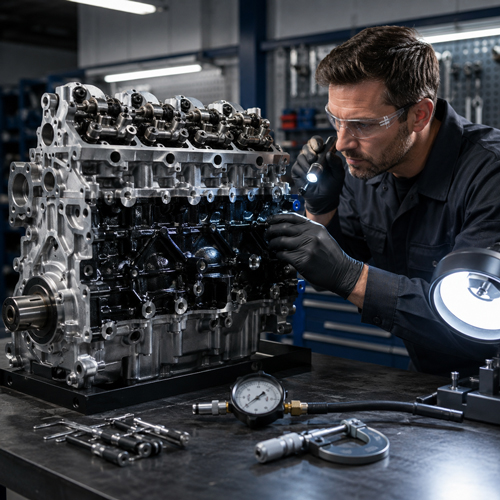
In 2026, reliability is non-negotiable. Every engine assembly—from the compact V6 to the heavy-duty V8—undergoes rigorous cold-cycle and hot-test protocols. These tests verify oil pressure, compression ratios, and thermal stability before the engine leaves our facility.
This commitment to precision minimizes "out-of-box" failures and maximizes your fleet's uptime, directly supporting the efficiency goals of your commercial fleet engines.
Product Spotlight: Targeted Power for Every Duty Cycle
We provide comprehensive solutions tailored to the specific TCO goals discussed earlier. Our focus is on V8 engine efficiency, V8 vs V6 fuel economy, and aligning commercial fleet engines with their intended duty cycles:
High-Efficiency V6 Assemblies: Engineered for the modern urban logistics sector. Our V6 units prioritize fuel atomization and reduced internal friction, making them ideal for brands like Toyota, Hyundai, and Kia that dominate the last-mile delivery market.
These commercial fleet engines deliver exceptional V8 vs V6 fuel economy in urban environments, reducing OpEx for high-frequency routes.
Heavy-Duty V8 Assemblies: For operators managing long-haul distribution or heavy construction loads, our V8 bare engines and complete assemblies offer the structural integrity needed for high-torque, high-stress environments.
These commercial fleet engines are built for longevity, ensuring your "Power vs. Efficiency" trade-off favors durability while maintaining optimal V8 engine efficiency for long-haul routes.
The Fuchuan Advantage: Global Reach and Inventory Depth
As a professional supplier in China, we understand that downtime is the ultimate "cost" in Total Cost of Ownership for commercial fleet engines. Our solutions are designed to minimize downtime while optimizing V8 engine efficiency and V8 vs V6 fuel economy.
100,000+ SKU Inventory: Our extensive warehouse maintains ready-to-ship stock for a vast range of international brands. This ensures you won’t wait weeks for critical parts for your commercial fleet engines—whether V6 or V8.
Global Export Expertise: Currently serving over 100 countries, we offer streamlined logistics and competitive pricing that bypasses multiple layers of markups. This makes our commercial fleet engines—including high-efficiency V8s and fuel-saving V6s—more accessible and cost-effective for fleets worldwide.
Direct Sourcing: By sourcing directly from Guangzhou Fuchuan, fleet managers can reduce acquisition costs by 15–25% compared to local distributors. This directly improves the bottom line of your TCO analysis.
Our commitment to quality ensures these cost savings don't come at the expense of V8 engine efficiency, V8 vs V6 fuel economy, or long-term reliability.
Final Recommendation: A Decision-Making Framework
To optimize your fleet in 2026, we recommend a hybrid procurement strategy that aligns commercial fleet engines with duty cycles. This strategy leverages V8 engine efficiency and V8 vs V6 fuel economy advantages to maximize profitability:
-
Select Fuchuan V6 Assemblies for your city-based, high-frequency routes to capitalize on fuel savings and lower routine maintenance—maximizing V8 vs V6 fuel economy in urban environments.
-
Select Fuchuan V8 Assemblies for your regional heavy-haulers to ensure a 500,000+ km lifespan and high resale value—leveraging V8 engine efficiency and durability for long-haul success.
At Guangzhou Fuchuan Engine, we don't just supply commercial fleet engines; we provide the mechanical foundation for your fleet's financial success. Whether you're focused on V8 engine efficiency, V8 vs V6 fuel economy, or long-term TCO, our tailored solutions are designed to help your fleet thrive in 2026 and beyond.
Heavy-Duty Truck Diesel Engine Lifespan Analysis: Maintenance Secrets for 1 Million Km Without Major Repair
The Prince of Performance: Why the BMW N14B16A Remains the King of the Compact Hot-Hatch
Related Article
Explore the Nissan VQ engine, the legendary V6 engine that won Ward's 10 Best for 14 straight years. Source tested, warranted VQ units from Fuchuan Engine.
Nissan VQ Series V6: How a Naturally Aspirated Engine Dominated Ward's 10 Best for 14 Straight Years
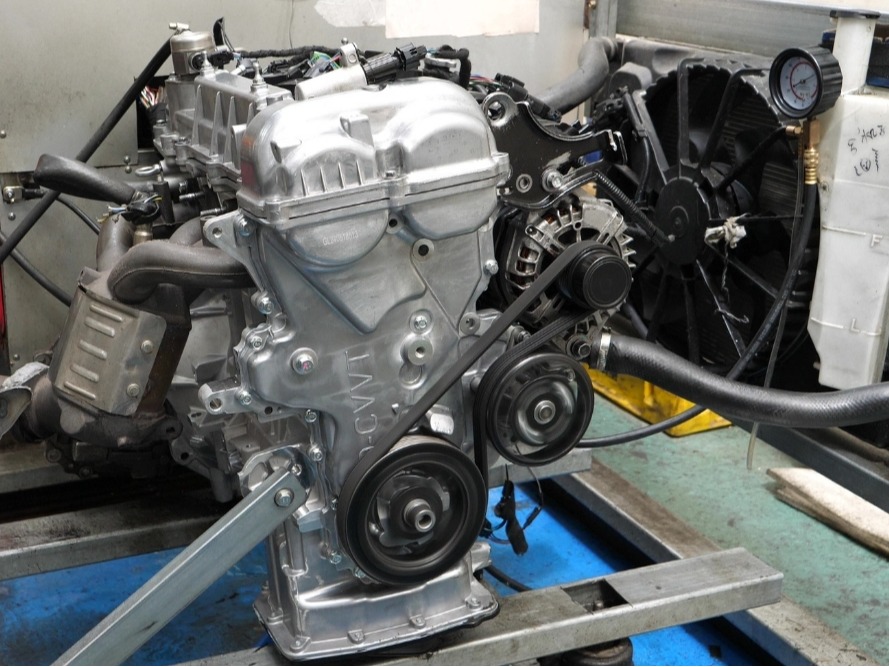
Answers to top engine buyer questions: engine MOQ, engine shipping time, engine payment terms, sample orders, warranty, and after-sales. Contact Fuchuan.
Engine Purchasing FAQ: MOQ, Lead Time, and Payment Terms Explained