Industrial Hybrid Vehicles: Hybrid Powertrain Integration Guideline for Motor and Engine Matching
author: Vicky Wong
2026-05-13

The Evolution and Necessity of Hybrid Systems in Industrial Vehicles
The global industrial sector faces mounting pressure to "green" fleets amid strict carbon neutrality mandates. However, the grueling demands of industrial hybrid vehicles—from mining excavators to port tractors—expose an "electrification gap" pure batteries cannot bridge. Hybrid systems are thus a strategic necessity, advancing hybrid powertrain integration and optimizing hybrid engine systems.
The Limitations of Pure Electrification
Unlike passenger EVs, heavy industrial vehicles face energy density and uptime constraints. For 10–12 hours of continuous high-load operation, battery packs are too heavy and costly; fast-charging infrastructure is scarce in remote areas. Hybridization solves this by combining liquid fuel endurance with electric propulsion efficiency— a key benefit of well-designed hybrid engine systems for hybrid powertrain integration.
Defining the Industrial Hybrid Landscape
Hybrid powertrain integration must align with a vehicle's duty cycle, critical for optimizing industrial hybrid vehicles and their hybrid engine systems. Two primary categories exist:
-
Construction Machinery: Handles extreme transient loads and energy recovery (e.g., excavator swing deceleration), requiring robust hybrid engine systems.
-
Logistics and Material Handling: Focuses on "peak shaving" and low-emission electric-only operation, where hybrid powertrain integration balances efficiency and adaptability.
Understanding these differences is key to matching motors and internal combustion engines (ICE)—a core part of hybrid powertrain integration and hybrid engine systems for industrial hybrid vehicles.
The Strategic Value Proposition
Hybrid systems for industrial hybrid vehicles deliver three key benefits, enhanced by refined hybrid powertrain integration and advanced hybrid engine systems:
-
Operational Economy: Keeping engines in their efficiency "sweet spot" and using motors for transients cuts fuel consumption by 20%–35%.
-
Emission Compliance: Hybrid systems meet Stage V/Tier 4 Final standards without complex after-treatment, critical for industrial hybrid vehicles.
-
Superior Torque: Electric motors eliminate diesel turbo-lag, boosting responsiveness— a key advantage of well-executed hybrid powertrain integration.
Hybrid systems are the new benchmark for industrial excellence, balancing productivity and sustainability through hybrid powertrain integration and advanced hybrid engine systems.
Internal Combustion Engine (ICE) and Motor Matching Strategies
The core of hybrid powertrain integration in industrial hybrid vehicles is matching ICE (steady-state power) and electric motors (transient response). Success depends on maximizing their strengths to optimize hybrid engine systems.
Power Split and Architecture Optimization
Hybrid powertrain integration starts with power split analysis, tailored to industrial hybrid vehicles’ duty cycles and hybrid engine systems:
-
Series Hybrids: Ideal for low-speed, high-cycle vehicles (e.g., forklifts), where the engine acts as a generator, simplifying integration.
-
Parallel Hybrids: Preferred for heavy machinery— motors handle transient peaks, allowing engine downsizing/down-speeding to boost efficiency.
Thermodynamic Optimization and the BSFC Map
Hybrid powertrain integration decouples the engine from wheels/hydraulics, letting it operate in its Brake Specific Fuel Consumption (BSFC) "sweet spot"—a critical feature of high-performance hybrid engine systems. Motors handle "peak shaving," reducing thermal stress and soot for Stage V compliance.
Dynamic Response Matching: Eliminating Turbo-Lag
Motor-engine matching in hybrid powertrain integration eliminates turbo-lag in industrial hybrid vehicles. Motors provide instant torque during load spikes (e.g., excavator bucket impact), allowing engines to focus on fuel efficiency— a key hybrid engine systems optimization.

Integrated Thermal Management
Poor hybrid powertrain integration often overlooks thermal synergy. Motors operate at 60–70°C (vs. 90–105°C for engines); dual-loop thermal management leverages engine waste heat to warm batteries in cold climates, boosting efficiency for industrial hybrid vehicles.
Summary
Seamless hybrid powertrain integration unites motors and engines into a "Power Brain." Aligning Fuchuan’s hybrid engine systems with electric components delivers productivity industrial hybrid vehicles cannot achieve with either technology alone.

Advanced Control Strategies for System Integration
Mechanical matching is the "physical foundation" of industrial hybrid vehicles; control strategies are the "intelligent brain" driving hybrid powertrain integration and hybrid engine systems efficiency in harsh, unpredictable environments.
Energy Management Systems (EMS): Precision Logic
EMS is core to hybrid systems for industrial hybrid vehicles, orchestrating hybrid powertrain integration and hybrid engine systems performance through two key architectures:
-
Rule-Based Strategies: Simple IF-THEN logic based on load/SoC, robust but less efficient.
-
ECMS: Cutting-edge optimization treats electricity as "virtual fuel," calculating optimal power split to maximize hybrid engine systems efficiency.
Load Leveling and Peak Shaving: The Engine's "Shield"
Peak shaving— a key hybrid powertrain integration benefit— lets motors handle load spikes (e.g., loader breakout force), avoiding oversized engines. This steady-state operation cuts fuel use by up to 30% and extends hybrid engine systems life.
Batteries provide high-impact energy, keeping engines at optimized RPM— reducing thermal cycling and mechanical shock for industrial hybrid vehicles.
Intelligent Start-Stop and Regenerative Recovery
Industrial operations’ cyclic nature lets hybrid powertrain integration boost efficiency for industrial hybrid vehicles and their hybrid engine systems:
-
Dynamic Start-Stop: Shuts down Fuchuan engines during low-load periods, eliminating idle fuel waste.
-
Regenerative Recovery: Motors act as generators during braking/downhill, managing battery current while keeping engines ready for load increases.
Summary
Advanced controls bridge hardware potential and real-world performance. Integrating these strategies turns components into seamless solutions for industrial hybrid vehicles, supported by Fuchuan’s reliable hybrid engine systems and hybrid powertrain integration.
Reliable Power Core: Guangzhou Fuchuan Engine Solutions
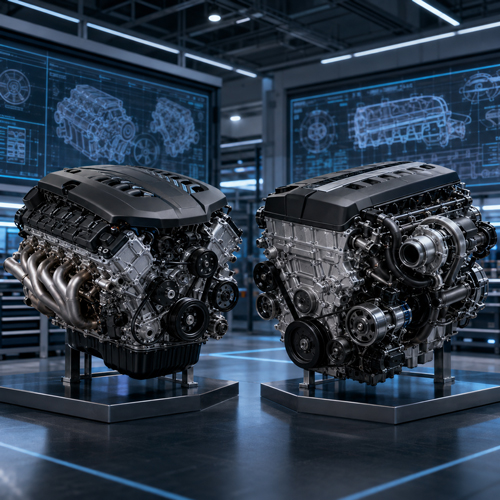
The ICE is the "heart" of hybrid powertrain integration for industrial hybrid vehicles. Guangzhou Fuchuan Engine delivers high-performance hybrid engine systems tailored to hybrid duty cycles, enabling seamless integration.

Professionalism Rooted in Scale
As a leading Chinese engine specialist, Fuchuan offers 800+ models, matching exact displacement/torque needs for hybrid powertrain integration. Its engine assemblies, bare engines, and cylinder heads withstand hybrid stressors (start-stop, peak shaving) for industrial hybrid vehicles.
Hybrid-Ready Engine Lineup
Fuchuan’s portfolio is engineered for hybrid efficiency, supporting hybrid powertrain integration in industrial hybrid vehicles:
-
High-Efficiency Diesel Assemblies: Ideal for heavy industrial hybrid vehicles (excavators, terminal tractors), acting as range extenders while motors handle transients.
-
Compact & DOHC Series: Perfect for light/medium vehicles (AGVs, forklifts), offering high power-to-weight ratios for parallel hybrid configurations.
Engineering Customization and Support
Fuchuan provides hybrid engine systems customization— modifying mounts, drives, and intake/exhaust—to simplify hybrid powertrain integration for industrial hybrid vehicles, reducing OEM R&D and accelerating time-to-market.
Quality Assurance and Global Reliability
Fuchuan engines undergo rigorous testing to meet international standards, minimizing downtime and maximizing TCO benefits for industrial hybrid vehicles relying on hybrid powertrain integration and hybrid engine systems.
Implementation Challenges and Future Outlook
Adopting hybrid systems requires holistic hybrid powertrain integration and forward planning for industrial hybrid vehicles and their hybrid engine systems. Navigating integration hurdles separates market leaders.
Navigating Implementation: Durability and Maintenance
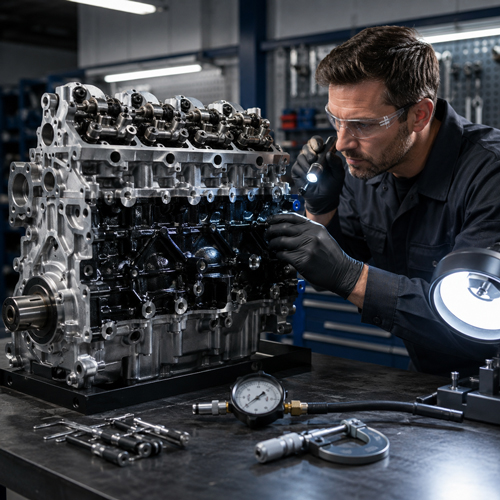
Hybrid powertrain integration adds drivetrain complexity. Hybrid engines face cold-start stress and thermal cycling; Fuchuan enhances lubrication/cooling to ensure reliability for industrial hybrid vehicles. Specialized technicians are now needed, making Fuchuan’s service-friendly designs critical.
The Digital Frontier: Intelligent Connectivity and IoT
Intelligent connectivity will enhance hybrid powertrain integration and hybrid engine systems for industrial hybrid vehicles. ECU-cloud integration enables predictive maintenance:
-
Remote Diagnostics: Real-time monitoring prevents costly downtime by detecting anomalies early.
-
Edge Computing: Terrain-aware algorithms pre-adjust power curves for high-load sections, boosting efficiency.
Fuchuan’s hybrid engine systems feature digital interfaces for easy sensor integration, compatible with future smart factories/ports.
Conclusion: A Synergistic Future
Hybrid powertrain integration, combining motors and Fuchuan's hybrid engine systems, is the best solution for industrial energy challenges. It optimizes engines, delivering cleaner, more powerful, and profitable industrial hybrid vehicles— the new standard for industrial performance.

About Us
Guangzhou Fuchuan Engine (Guangzhou Fuchuan Machinery Equipment Co., Ltd.) is a leading specialist in automotive and industrial engine assemblies, dedicated to providing high-reliability, hybrid-ready engine solutions for industrial hybrid vehicles. With decades of manufacturing expertise, 800+ in-stock models, and professional customization capabilities, we empower OEMs and system integrators to achieve seamless hybrid powertrain integration and optimize hybrid engine systems for industrial applications. Our commitment to quality, efficiency, and innovation makes us the trusted partner for businesses pursuing greener, more productive industrial mobility.
Ready to elevate your industrial hybrid vehicles with reliable hybrid engine systems and seamless hybrid powertrain integration? Contact Guangzhou Fuchuan Engine today to discuss your customization needs, explore our hybrid-ready engine lineup, and partner with us to turn your hybrid vision into reality. Let’s collaborate to build cleaner, more efficient, and high-performance industrial vehicles together.
Turbocharged vs Naturally Aspirated: How B2B Buyers Choose the Right Engine by Working Conditions
Heavy-Duty Truck Diesel Engine Lifespan Analysis: Maintenance Secrets for 1 Million Km Without Major Repair
Related Article
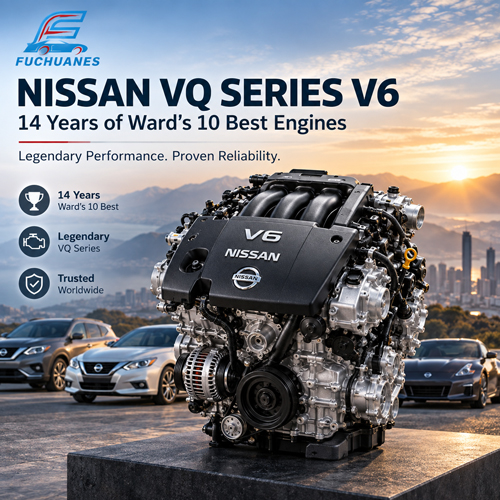
Explore the Nissan VQ engine, the legendary V6 engine that won Ward's 10 Best for 14 straight years. Source tested, warranted VQ units from Fuchuan Engine.
Nissan VQ Series V6: How a Naturally Aspirated Engine Dominated Ward's 10 Best for 14 Straight Years
Answers to top engine buyer questions: engine MOQ, engine shipping time, engine payment terms, sample orders, warranty, and after-sales. Contact Fuchuan.
Engine Purchasing FAQ: MOQ, Lead Time, and Payment Terms Explained