Turbocharged vs Naturally Aspirated: How B2B Buyers Choose the Right Engine by Working Conditions
author: Vicky Wong
2026-05-18

The Core Dilemma: Turbocharged vs. Naturally Aspirated in B2B Procurement
In commercial fleet management, heavy equipment distribution, and industrial procurement, selecting the right powertrain is rarely a matter of brand preference; it is a precise calculation of operational viability. At the heart of automotive and machinery procurement lies a fundamental mechanical crossroads: turbocharged vs naturally aspirated engine assemblies. For B2B buyers, mastering the differences between these two engine types is critical to effective turbo engine selection and leveraging na engine reliability for long-term operational success.
The Technical Divide: Atmospheric Pressure vs. Forced Induction
To optimize a procurement strategy, buyers must first look past marketing buzzwords and evaluate the mechanical variance in how these engine architectures breathe— a key step in navigating turbocharged vs naturally aspirated choices and making informed turbo engine selection decisions.
Naturally Aspirated Engines: These powerplants rely strictly on atmospheric pressure. As the piston moves downward during the intake stroke, it creates a vacuum, drawing air into the combustion chamber. The design is mechanically straightforward, highly predictable, and free from complex auxiliary forced-induction components— hallmarks of na engine reliability that make them a staple in many commercial operations.
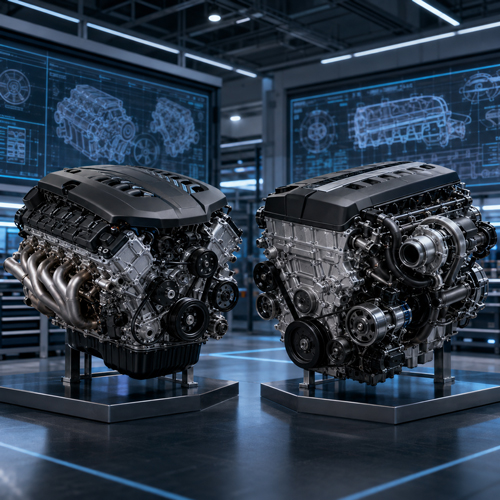
Turbocharged Engines: These systems utilize an exhaust-driven turbine to compress incoming air, forcing more oxygen into the combustion chamber. By packing more air into the cylinders, a smaller displacement turbocharged engine can burn more fuel and generate substantially higher power and torque outputs, effectively doing the work of a much larger NA engine. Understanding this advantage is essential forturbo engine selection in high-demand operational scenarios.
Beyond Horsepower: The Commercial Reality of TCO
While retail consumers often focus on peak horsepower and acceleration metrics, B2B procurement professionals know that raw performance figures can be deceptive. In the commercial sector, an engine is a revenue-generating asset, meaning its evaluation must shift from superficial specs to Working Conditions and Total Cost of Ownership (TCO)— a balance that lies at the core of turbocharged vs naturally aspirated decision-making.
The B2B Reality: A mismatched engine architecture directly penalizes a business through accelerated oil degradation, unexpected component fatigue, and inflated daily fuel burn. For commercial buyers, the right choice isn't the most powerful engine—it is the engine that maintains peak efficiency under specific operational stresses, whether that means prioritizing na engine reliability for harsh environments or turbo engine selection for high-performance needs.
Aligning Asset Architecture with Operational Environments: This guide is engineered to bridge the gap between technical design and financial execution. Over the following chapters, we will dissect how distinct working conditions—ranging from high-altitude logistics to severe, high-heat urban stop-and-go cycles—dictate the ideal engine choice in the turbocharged vs naturally aspirated debate. By shifting the procurement framework from a generic checklist to an environmental mapping strategy, fleet managers, procurement officers, and international distributors can minimize unscheduled downtime, protect their supply chain, and maximize asset longevity—whether relying on na engine reliability or strategic turbo engine selection.


Environmental & Operational Mapping: Which Engine Thrives Where?
Deploying a commercial fleet without matching the engine architecture to the operating environment is a costly operational mistake—one that can be avoided by understanding turbocharged vs naturally aspirated strengths and weaknesses, prioritizing na engine reliability where appropriate, and refining turbo engine selection for high-demand scenarios. Operational environments directly dictate an engine’s volumetric efficiency, thermal stress, and wear rates.
To maximize asset utilization, B2B buyers must evaluate four distinct operational scenarios, each highlighting critical considerations for turbocharged vs naturally aspirated choices, turbo engine selection, and na engine reliability.
Scenario A: High-Altitude and Mountainous Terrains
In high-altitude regions, atmospheric pressure drops significantly, resulting in thinner air and reduced oxygen density— a challenge that underscores the importance of turbo engine selection over relying solely on na engine reliability.
The NA Problem: Naturally Aspirated engines suffer from severe oxygen deprivation. For every 1,000 meters of elevation gain, an NA engine loses approximately 10% of its power. This results in sluggish performance, strained drivability, and increased fuel consumption as the engine labors to move the same payload—limitations that make na engine reliability less impactful in high-altitude settings.
The Turbo Solution: Turbocharged engines excel in thin air. The exhaust-driven compressor automatically compensates for low atmospheric pressure by forcing more air into the intake manifold. This maintains consistent torque curves and power retention, making turbos mandatory for cross-border or mountainous logistics and a key component of strategic turbo engine selection in these environments. This contrast is a defining factor in the turbocharged vs naturally aspirated decision for high-altitude operations.
Scenario B: Urban Stop-and-Go & Short-Haul Logistics
Last-mile delivery and city transit require frequent stopping, prolonged idling, and low-speed maneuvering—conditions where na engine reliability shines and turbo engine selection may pose unnecessary risks, a key distinction in the turbocharged vs naturally aspirated debate.
The NA Advantage: NA engines are inherently suited for urban environments. They offer immediate throttle response off the line without "turbo lag" (the delay before a turbo builds boost). Furthermore, NA engines operate at lower internal temperatures during idle, minimizing thermal stress on engine oil and cooling systems—core benefits that enhancena engine reliability in stop-and-go settings. For B2B buyers in urban logistics, this makes NA engines a practical choice in the turbocharged vs naturally aspirated comparison.
The Turbo Risk: Modern turbochargers rely on steady oil flow and optimal operating temperatures. Frequent short trips prevent the engine from reaching these thresholds, accelerating carbon buildup on intake valves and fuel injectors. Additionally, sudden engine shut-offs after heavy loads can cause oil to bake (coke) inside the turbo bearings, increasing premature component failure risks—factors that complicate turbo engine selection for urban operations.
Scenario C: Heavy Payloads and Long-Haul Highway Cruising
Sustained highway transport demands continuous power delivery over long distances under high gross vehicle weight ratings (GVWR)—a scenario where turbo engine selection is often superior to relying on na engine reliability, a critical point in the turbocharged vs naturally aspirated decision.
The Turbo Advantage: For long-haul operations, turbocharged engines are highly efficient. They deliver massive low-end torque at low RPMs, allowing heavy trucks to climb highway grades without constant downshifting. Once at cruising speed, a smaller-displacement turbocharged engine burns significantly less fuel than a large-displacement NA engine producing equivalent power, drastically lowering a fleet's fuel overhead. This efficiency makes turbo engine selection a strategic priority for long-haul fleets navigating theturbocharged vs naturally aspirated choice.
Scenario D: Harsh Industrial Environments & Extreme Temperatures
Remote mining operations, construction zones, and desert climates expose machinery to high ambient heat, dust, and limited maintenance infrastructure—conditions where na engine reliability is unmatched, making it a key consideration in the turbocharged vs naturally aspirated debate and outweighing turbo engine selection benefits.
The NA Advantage: In unpredictable or remote environments, mechanical simplicity is the ultimate safeguard against downtime. NA engines lack the complex plumbing, intercoolers, and high-speed turbines (spinning at upwards of 200,000 RPM) found in turbo systems. With fewer auxiliary sensors and oil lines to fail, NA assemblies offer predictable, robust reliability and are far easier to service using standard local parts networks—core attributes of na engine reliability that make them indispensable in harsh industrial settings. For B2B buyers in these sectors, na engine reliability is often the deciding factor in the turbocharged vs naturally aspirated comparison.
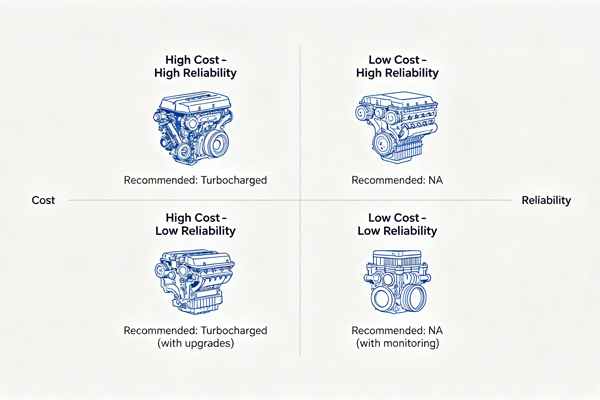
The B2B Strategic Evaluation Matrix (Cost vs. Reliability)
For procurement officers and fleet directors, selecting an engine architecture requires balancing immediate capital expenditure (CapEx) against long-term operational expenditure (OpEx)—a balance that is central to turbocharged vs naturally aspirated decision-making, turbo engine selection, and leveraging na engine reliability. A miscalculation in either direction directly erodes profitability through excessive fuel burn or unscheduled asset downtime.
CapEx vs. OpEx Analysis: Balancing Upfront Costs and Lifecycle Savings
The choice between Naturally Aspirated (NA) and Turbocharged engines represents a classic procurement trade-off that lies at the heart of turbocharged vs naturally aspirated considerations, with implications for both turbo engine selection and na engine reliability.
Naturally Aspirated Engines (Lower CapEx, Stable OpEx): NA engines feature lower initial acquisition costs. Because they lack expensive auxiliary components like turbochargers, intercoolers, and complex wastegate systems, the baseline price of the engine assembly is highly competitive. For operations where annual mileage is low or assets idle frequently, the CapEx savings of an NA engine outweigh potential fuel efficiencies—especially when factoring in na engine reliability and reduced maintenance costs. This makes NA engines a cost-effective choice in specific turbocharged vs naturally aspirated scenarios.
Turbocharged Engines (Higher CapEx, Lower OpEx): Turbocharged variants demand a premium upfront investment. However, in high-utilization applications—such as long-haul logistics or continuous transport—the thermal efficiency of forced induction yields substantial fuel savings. Over a typical 3-to-5-year fleet lifecycle, these OpEx reductions easily offset the initial CapEx premium, justifying strategic turbo engine selection in the turbocharged vs naturally aspirated debate.
Downtime and Maintenance Overhead
Asset availability is the most critical metric in commercial operations. The mechanical complexity of the powertrain directly influences scheduled and unscheduled maintenance cycles— a key factor in evaluating turbocharged vs naturally aspirated engines, turbo engine selection risks, and na engine reliability benefits.
Maintenance Realities: Turbocharged engines operate under extreme thermal and mechanical stress, with turbine speeds frequently exceeding 200,000 RPM. Consequently, turbocharged fleets require strict adherence to premium maintenance protocols, including high-grade synthetic oils, frequent filter replacements, and dedicated cooling system checks. Neglecting these schedules risks sudden, high-cost component failures and extended operational downtime—challenges that must be weighed in turbo engine selection decisions.
In contrast, NA engines exhibit a highly predictable, linear wear-and-tear curve. Their mechanical simplicity minimizes failure points, making them highly tolerant of baseline maintenance routines and varying fuel qualities—core elements of na engine reliability. For operations deployed in regions with limited technical infrastructure or harsh ambient dust, the NA platform provides a vital safeguard against catastrophic breakdown, reinforcing its value in theturbocharged vs naturally aspirated comparison.
Working Condition Decision Matrix
To streamline the procurement pipeline, B2B buyers can utilize the following strategic cross-reference matrix to align engine selection with primary operational drivers—simplifying turbocharged vs naturally aspirated choices, optimizing turbo engine selection, and leveragingna engine reliability.
|
Working Condition
|
Optimal Engine Architecture
|
Primary Decision Driver
|
Financial Impact
|
|---|---|---|---|
|
High Altitude / Mountainous
|
Turbocharged
|
Power retention via forced oxygen intake (key for turbo engine selection)
|
Eliminates altitude-induced cycle lag
|
|
Heavy Payload / Long-Haul
|
Turbocharged
|
High low-end torque & superior thermal efficiency (core of turbo engine selection)
|
Lowers total fuel overhead per ton-mile
|
|
Intense Urban / Stop-and-Go
|
Naturally Aspirated
|
Zero turbo lag & lower idle operating temperatures (leveraging na engine reliability)
|
Prevents premature carbon fouling & component wear
|
|
Extreme Heat / Remote Sites
|
Naturally Aspirated
|
Component simplicity & linear wear predictability (hallmarks of na engine reliability)
|
Minimizes unscheduled downtime and logistics risks
|
Guangzhou Fuchuan Engine: Premium Assembly Solutions for Every Fleet
Navigating the complexities of powertrain procurement requires a manufacturing partner capable of delivering precision engineering, industrial scale, and proven field reliability—whether you prioritize turbo engine selection for high efficiency or na engine reliability for harsh environments. Guangzhou Fuchuan Engine stands at the forefront of the automotive supply sector, offering tailored solutions for the turbocharged vs naturally aspirated needs of global B2B buyers. As a professional, national high-tech supplier based in China, we specialize in the manufacturing and distribution of complete automotive engine assemblies, long blocks, and cylinder heads tailored specifically to the rigorous demands of global commercial fleets, machinery distributors, and remanufacturing sectors.
Our Naturally Aspirated (NA) Lineup: Unmatched Operational Reliability
For enterprises operating in demanding, unpredictable environments—such as extreme ambient heat, remote construction zones, or high-frequency urban delivery loops—mechanical simplicity is directly linked to profitability. Guangzhou Fuchuan Engine offers a robust portfolio of heavy-duty, high-durability NA engine assemblies engineered to eliminate unnecessary auxiliary failure points, delivering industry-leading na engine reliability for B2B buyers navigating the turbocharged vs naturally aspirated decision.
A prime example is our premium 2TR-FE long block assembly, widely specified by utility and commercial fleet managers globally. These units are built to deliver stable, linear power, maximum operational uptime, and exceptional tolerance to variable fuel qualities and baseline maintenance routines—core features that define na engine reliability. For operations where downtime is not an option, our NA lineup ensures your assets remain productive with minimal maintenance overhead, making it a trusted choice in the turbocharged vs naturally aspirated comparison.
Our Turbocharged Lineup: Next-Generation Fleet Efficiency
To meet the demands of modern cross-border logistics and heavy-payload transport, where fuel economy and power-to-weight ratios dictate operating margins, Fuchuan provides advanced turbocharged engine assemblies—optimized for strategic turbo engine selection in the turbocharged vs naturally aspirated landscape. These systems utilize high-precision forced induction components engineered to maximize volumetric efficiency while complying with stringent international emissions standards.
Designed to deliver massive low-end torque, our turbocharged lineup allows fleets to optimize engine displacement without sacrificing hauling power. This architecture drastically reduces total fuel burn over long-haul highway routes, lowering your fleet's overall carbon footprint and significantly trimming total cost of ownership (TCO)—key benefits that make our turbocharged engines a top choice for turbo engine selection in high-utilization scenarios.
The Fuchuan Quality Control & Global Supply Chain Advantage
Procurement security relies heavily on strict quality assurance and logistical efficiency—whether you're investing in turbo engine selection or relying on na engine reliability for your fleet. Every bare engine, long block, and complete assembly leaving our facilities undergoes rigorous, multi-stage quality control testing that meets or exceeds OEM performance standards, ensuring consistent performance across both our turbocharged and NA lineups in the turbocharged vs naturally aspirated spectrum.
With an established global export network spanning over 100 countries—including key markets across Southeast Asia, the Middle East, Europe, and the Americas—Guangzhou Fuchuan Engine guarantees seamless international compliance, robust export packaging, and reliable lead times. We don't just supply engines; we secure your operational supply chain, supporting your turbo engine selection and na engine reliability goals with end-to-end support.
FAQ
Is turbocharged always better for resale?
No. The right answer depends on where and how the engine will be used. Good distributors win by matching the engine to the job, not by pushing one configuration to every buyer.
Why do many distributors still prefer naturally aspirated engines?
Because na engine reliability is easier to support in markets where maintenance conditions are basic, operating environments are harsh, or buyers want lower service complexity.
When should I prioritize turbo engine selection?
Prioritize turbo engine selection when your customers need stronger torque, better high-altitude performance, or better long-haul efficiency under load.
Can you support both turbocharged and naturally aspirated orders?
Yes. We support a broad range of engine assembly needs and help buyers evaluate turbocharged vs naturally aspirated requirements based on real market use.
If you are sourcing engines for fleets, distributors, or project-based equipment demand, Guangzhou Fuchuan Engine can help match the right assembly to your application and support smarter turbo engine selection based on market conditions, duty cycle, and total cost targets. This approach also helps buyers balance turbo engine selection priorities with long-term na engine reliability needs in different operating environments.
Inline Six vs V6 Engine Balance Analysis: Vibration Impacts on Commercial Vehicle Chassis
Industrial Hybrid Vehicles: Hybrid Powertrain Integration Guideline for Motor and Engine Matching
Related Article
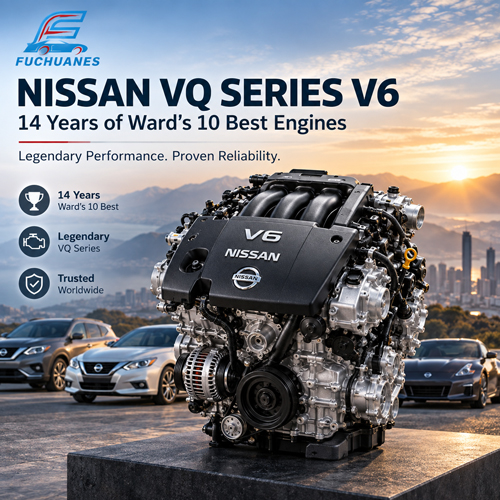
Explore the Nissan VQ engine, the legendary V6 engine that won Ward's 10 Best for 14 straight years. Source tested, warranted VQ units from Fuchuan Engine.
Nissan VQ Series V6: How a Naturally Aspirated Engine Dominated Ward's 10 Best for 14 Straight Years
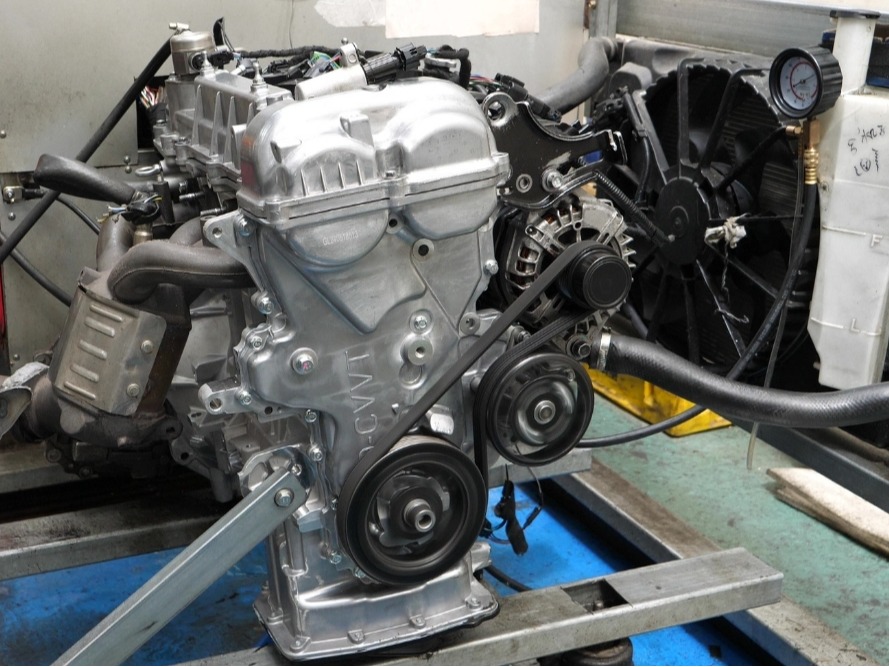
Answers to top engine buyer questions: engine MOQ, engine shipping time, engine payment terms, sample orders, warranty, and after-sales. Contact Fuchuan.
Engine Purchasing FAQ: MOQ, Lead Time, and Payment Terms Explained