Inline Six vs V6 Engine Balance Analysis: Vibration Impacts on Commercial Vehicle Chassis
author: Vicky Wong
2026-05-21

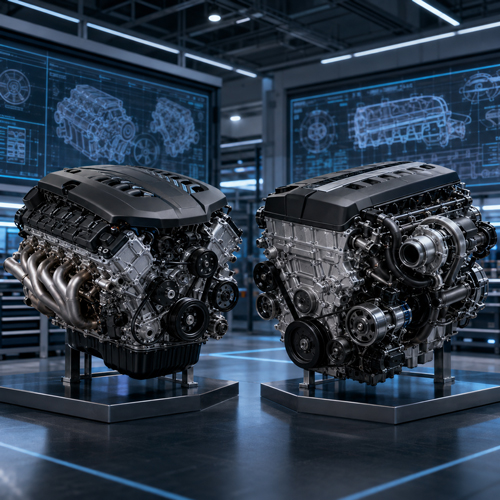
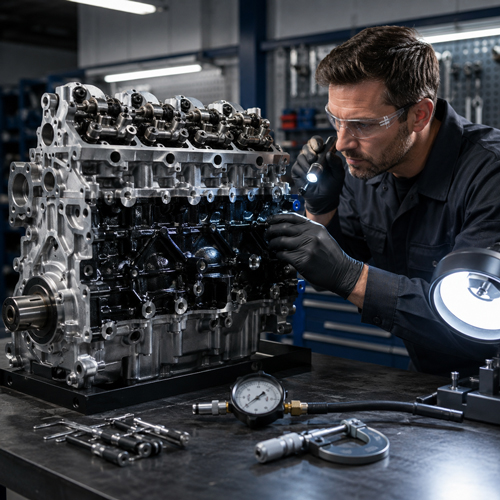
For commercial vehicle fleets, engine vibration balance is the core factor affecting chassis durability, driving safety, and long-term operating costs. Choosing between inline-6 vs v6 engine configurations has long been a key engineering and procurement decision for medium and heavy-duty transport vehicles, as engine structural balance directly determines engine balance durability and the overall service life of fleet equipment. Many fleet operators overlook the fundamental differences in dynamic balance between I6 and V6 engines, resulting in frequent chassis fatigue damage, high maintenance costs, and poor driving experience. In-depth exploration of professional straight six engine benefits and the balance defects of V6 engines can help logistics enterprises optimize powertrain selection, reduce total vehicle operating costs, and improve fleet operational stability. This article systematically analyzes the dynamic vibration principles of the two engine architectures and their far-reaching impact on commercial vehicle chassis performance.
Foundations of Engine Dynamics and NVH in Commercial Vehicles
Introduction to Commercial Vehicle NVH (Noise, Vibration, and Harshness)
In the highly competitive commercial transportation sector, operational efficiency and vehicle longevity are paramount. At the core of fleet profitability is NVH (Noise, Vibration, and Harshness) management, a discipline that extends far beyond passenger comfort and ties closely to engine balance durability for long-term fleet operation. For heavy-duty applications and long-haul transport, the chassis serves as the backbone of the vehicle, bearing extreme structural loads while acting as the primary conduit for powertrain forces, making the choice between inline-6 vs v6 engine architectures a pivotal design decision for commercial vehicle stability.
Uncontrolled powertrain vibration introduces severe cyclical stresses that accelerate chassis fatigue, leading to micro-cracks in frame rails, crossmembers, and suspension mounts. Furthermore, these high-amplitude vibrations propagate through the structure to damage sensitive or perishable cargo, directly impacting freight insurance claims. From a human capital perspective, excessive cabin NVH is a primary driver of operator fatigue, which compromises safety, decreases reaction times, and drastically increases fleet turnover rates. Consequently, controlling vibration at its source—the engine—and leveraging straight six engine benefits for superior stability is a strategic necessity for modern fleet logistics.
Physics of Engine Imbalance
To mitigate these structural risks, engineers must analyze the internal physics of reciprocating internal combustion engines, which generate both periodic forces and moments (couples). These imbalances are broadly classified into primary and secondary orders, directly affecting engine balance durability and overall vehicle operational reliability:
Primary Forces and Couples (1 Order): These vibrations occur at the same frequency as the engine's crankshaft rotation speed (1×RPM). They are generated by the heavy, repeating vertical acceleration and deceleration of the pistons and connecting rods as they move between Top Dead Center (TDC) and Bottom Dead Center (BDC). If unbalanced, these primary forces generate a violent vertical shaking or a rocking couple that twists the engine along its longitudinal axis, a key flaw observed in comparative studies of inline-6 vs v6 engine dynamic performance.
Secondary Forces and Couples (2 Order): These occur at twice the engine speed (2×RPM). Secondary vibrations are caused by the mathematical non-sinusoidal motion of the piston, a direct result of connecting rod angularity. Because the connecting rod tilts side-to-side during the stroke, the piston accelerates faster through the top half of its stroke than the bottom half, creating an inherent inertial discrepancy twice per revolution.
In commercial operations, these inertial forces do not act in a vacuum; they interact dynamically with high-pressure gas combustion forces. In heavy-duty diesel engines, the peak cylinder pressures are immense. When the combustion force slams downward on an inherently imbalanced crank train, it amplifies the mechanical vibration, transmitting severe, low-frequency harmonic shocks directly into the commercial vehicle chassis. Minimizing these forces through optimal engine architecture and harnessing core straight six engine benefits is the only way to ensure structural integrity and long-term engine balance durability for heavy-duty fleets.
Comparative Balance Analysis: Inline-Six (I6) vs. V6
Choosing between an Inline-Six (I6) and a V6 engine architecture represents a fundamental engineering trade-off between packaging constraints and dynamic mechanical balance, and a thorough inline-6 vs v6 engine comparison is essential for commercial vehicle design. For commercial vehicles, where long-term engine balance durability directly dictates profitability, understanding the internal force characteristics of these two configurations and the unique straight six engine benefits is critical.
The Inline-Six Configuration: Inherent Mathematical Perfection
The Inline-Six configuration is universally recognized for its flawless mechanical balance, standing as the core of straight six engine benefits that dominate heavy-duty commercial applications. By arranging six cylinders in a single line operating on a standard 120° crankshaft layout, the engine creates a perfect mirror image in its firing order (typically 1-5-3-6-2-4), delivering unmatched engine balance durability compared to alternative six-cylinder designs.
Force Cancellation: The pistons move in perfectly synchronized pairs (1 and 6, 2 and 5, 3 and 4). When a piston on the front half of the crankshaft moves upward, its twin on the rear half moves downward with identical velocity. This inherent synchronization is the key differentiator in any inline-6 vs v6 engine balance test.
Zero Primary & Secondary Moments: This precise symmetry ensures that all primary and secondary forces, as well as their corresponding rotational couples, are mutually canceled out down the centerline of the block.
Because the architecture achieves balance natively through geometry, an I6 does not require internal balance shafts. This clean design eliminates extra rotating mass, prevents parasitic power losses, and significantly simplifies the engine assembly—key straight six engine benefits that boost operational efficiency and extend service life while sustaining consistent engine balance durability across hundreds of thousands of operating miles.

The V6 Configuration: Packaging Efficiency vs. Dynamic Compromise
The V6 configuration splits six cylinders into two banks, typically arranged at a 60° or 90° angle, to share a single, shorter crankshaft. While this design yields a compact footprint that fits easily into tight engine bays, it introduces severe, complex mechanical imbalances that undermine engine balance durability, a critical flaw highlighted in all professional inline-6 vs v6 engine performance evaluations.
When an engine block is split into a V-shape, the mirror-image balance found in the inline configuration is broken. The reciprocating masses generate persistent end-to-end rocking couples. As the forces rotate around the shorter crankshaft, they create a violent weaving motion that tries to twist the engine around its center point, triggering continuous vibration that degrades chassis components over time.
To prevent these primary and secondary rocking couples from shaking the powertrain apart, V6 manufacturers must add heavy external counterweights and gear-driven internal balance shafts. These secondary dampening systems add substantial weight, increase mechanical complexity, elevate the risk of component failure, and introduce parasitic drag that permanently compromises lifetime fuel efficiency. For heavy-commercial chassis applications, the V6 trades native dynamic balance for a shorter engine bay, sacrificing the long-term engine balance durability and operational stability delivered by core straight six engine benefits.
Downstream Impact on the Commercial Vehicle Chassis
The structural and economic differences between the two six-cylinder engine architectures are fully realized where the engine mounts meet the frame. Powertrain vibrations do not stay contained within the engine block; they flow directly into the commercial vehicle chassis, altering fleet component longevity, driver health, and overall operating margins. The gaps in engine balance durability and performance between inline-6 vs v6 engine setups directly determine long-term fleet maintenance costs and operational reliability, while unique straight six engine benefits deliver sustained chassis protection.

Structural Fatigue and Component Longevity
Because a V6 engine relies on artificial balance shafts rather than native geometric symmetry, it passes continuous, high-frequency secondary vibrations into the vehicle frame. Over hundreds of thousands of miles, these unresolved harmonic forces subject the chassis to relentless cyclic loading, severely compromising engine balance durability and chassis structural integrity.
The primary victims of this continuous stress are engine mounts, transmission housings, and frame crossmembers. High-amplitude vibrations accelerate the degradation of elastomeric mounts, leading to premature metal-on-metal contact. Once mounts fail, raw structural harmonics propagate unchecked down the frame rails, causing micro-fractures around high-stress weld points and heavy suspension bushings. In contrast, the smooth operational profile enabled by key straight six engine benefits eliminates these destructive vibration frequencies at the source, shielding vital running gear from premature structural fatigue and maintaining stable engine balance durability throughout the vehicle lifecycle—this is the most prominent structural advantage in inline-6 vs v6 engine practical application comparisons.
Cabin Ergonomics and Driver Retention
For fleet operators, cabin NVH levels directly impact driver health, safety, and operational efficiency, and are heavily influenced by engine balance durability. Prolonged exposure to low-frequency chassis vibrations caused by imbalanced V6 engines causes significant occupational fatigue, while the superior balance of I6 engines leverages straight six engine benefits to optimize cabin comfort.
Physical Strain: Continuous vibrations traveling through the floorboards and steering column lead to muscle strain, joint fatigue, and chronic lower back pain for operators. This issue is far less severe in fleets utilizing I6 powertrains, a key advantage in real-world inline-6 vs v6 engine operational comparisons.
Cognitive Decline: High cabin vibration levels degrade driver focus, slow reaction times, and increase the likelihood of on-road incidents.
By utilizing the natural balance of an I6 engine, transport fleets can drastically reduce cabin resonance. Maintaining a smooth, quiet working environment helps protect human capital, improves safety, and reduces driver turnover—a major variable cost in modern logistics, all made possible by the inherent engine balance durability and core straight six engine benefits.
Total Cost of Ownership (TCO) Implications
Over a commercial vehicle’s operational lifecycle, engine balance directly affects the bottom line. The hidden costs of an inherently imbalanced powertrain show up clearly in a fleet's Total Cost of Ownership (TCO) metrics, with inline-6 vs v6 engine balance differences creating stark cost gaps, while superior engine balance durability and straight six engine benefits effectively reduce long-term fleet expenditures.
|
Operational Vector
|
V6 Engine Fleet
|
Inline-Six (I6) Fleet
|
|---|---|---|
|
Chassis Maintenance
|
Frequent replacement of mounts, U-joints, and suspension bushings due to harmonic wear, stemming from poor engine balance durability.
|
Extended service life on structural components and drivetrain linkages, supported by inherent straight six engine benefits and stable balance performance.
|
|
Downtime Risks
|
Higher risk of unscheduled shop time for structural weld repairs and balance shaft gear servicing, a common drawback in inline-6 vs v6 engine reliability tests.
|
Predictable, scheduled maintenance intervals focused purely on wear items, thanks to consistent engine balance durability.
|
|
Fuel Efficiency
|
Parasitic losses from internal balance shafts increase lifetime fuel consumption due to compromised dynamic balance.
|
Maximum thermal and mechanical efficiency with zero balance-system drag, one of the most valuable straight six engine benefits for cost control.
|
Choosing an I6 powertrain ensures that energy from fuel combustion goes entirely toward driving the wheels, rather than shaking the chassis. The resulting reduction in replacement parts, minimized vehicle downtime, and optimized fuel economy deliver clear financial advantages for commercial logistics networks, fully validating the superior engine balance durability and long-term value of I6 engines in any inline-6 vs v6 engine comprehensive evaluation.

Guangzhou Fuchuan Engine: Premium Engine Assembly Solutions
About Guangzhou Fuchuan Engine
As the commercial transportation sector transitions toward high-efficiency, low-maintenance fleet operations, selecting a reliable powertrain partner is a critical business decision. Headquartered in China's automotive manufacturing hub, Guangzhou Fuchuan Engine has established itself as a premier, professional supplier of complete auto engine assemblies, focusing on delivering products with superior engine balance durability and maximizing core straight six engine benefits for global clients.
Serving both domestic and global commercial vehicle markets, our enterprise specializes in delivering factory-certified, ready-to-install powertrain solutions that meet or exceed original equipment (OE) specifications. By integrating advanced metallurgical testing, computerized dynamic balancing, and rigorous quality control protocols into our manufacturing and sourcing pipelines, we ensure that every engine assembly delivered minimizes vibration, maximizes uptime, protects downstream chassis components, and fully leverages the structural advantages proven in inline-6 vs v6 engine professional analysis.
Our Flagship Inline-Six Engine Portfolio
Recognizing the mathematical perfection and operational advantages of the inline-six architecture detailed in this analysis, Guangzhou Fuchuan Engine has developed a robust portfolio of heavy-duty and medium-duty I6 engine assemblies. Our product lines are engineered specifically to eliminate the destructive primary and secondary harmonic forces that compromise chassis integrity, focusing on enhancing engine balance durability and amplifying all core straight six engine benefits for commercial fleet scenarios.
Key engineering benchmarks of our I6 engine assembly lineup include:
Precision-Balanced Crankshafts: Micro-machined and balanced on state-of-the-art industrial rotators to guarantee zero net primary or secondary rocking couples, laying the foundation for class-leading engine balance durability and creating a definitive edge in inline-6 vs v6 engine balance performance.
Advanced Torsional Vibration Dampers: Tuned to neutralize high-frequency crankshaft twist under peak load, ensuring smooth power delivery to the transmission and sustaining the stable operation advantages of straight six engine benefits.
Reinforced Block Castings: High-tensile alloy construction designed to absorb combustion forces internally, preventing vibration from propagating into the engine mounts and frame rails, further enhancing long-term engine balance durability.
Why Partner with Fuchuan for Commercial Fleets?
In commercial logistics, every hour a vehicle spends in a repair bay directly erodes operating margins. Partnering with Guangzhou Fuchuan Engine allows fleet operators and commercial vehicle distributors to fundamentally lower their Total Cost of Ownership through three distinct commercial advantages rooted in superior engine balance durability and exclusive straight six engine benefits verified by inline-6 vs v6 engine industry tests.
Chassis-Friendly Power: By eliminating structural harmonics at the source, our premium I6 engine assemblies preserve your fleet's chassis rails, suspension mounts, and drivetrain linkages—drastically reducing unscheduled maintenance and maintaining consistent engine balance durability over long service cycles.
Turnkey Supply Chain Efficiency: We deliver complete, fully built engine assemblies. This eliminates the labor, time, and quality variances associated with in-house engine rebuilding, getting your assets back on the road instantly while retaining all corestraight six engine benefits.
Guaranteed Reliability: Every engine assembly undergoes exhaustive hot-testing and oil-pressure verification before shipment, guaranteeing zero-mile operational reliability right out of the box and sustained engine balance durability for long-haul and heavy-duty operations.
For commercial fleets seeking to optimize vehicle longevity and operator safety while reducing component fatigue, Guangzhou Fuchuan Engine provides the engineered solutions required to secure a competitive edge in modern logistics, fully capitalizing on the proven advantages of I6 engines in all inline-6 vs v6 engine balance and durability assessments.
Choose Guangzhou Fuchuan Engine for Premium I6 Powertrain Solutions
Through systematic comparative analysis of inline-6 vs v6 engine dynamic performance, it is clear that inline-six engines outperform V6 engines in core indicators such as vibration cancellation, structural stability, and engine balance durability. Benefiting from unique geometric symmetry, I6 engines completely eliminate primary and secondary vibration couples without relying on auxiliary balance structures, fully releasing straight six engine benefits including low vibration, low loss, long chassis life, low maintenance frequency, and excellent fuel economy. In contrast, V6 engines rely on artificial balance compensation, which inevitably brings parasitic power loss, continuous chassis vibration fatigue, increased downtime risks, and higher long-term TCO, making it unsuitable for long-haul and heavy-duty commercial vehicle working conditions that pursue high durability and low comprehensive cost. For modern commercial fleets, choosing a high-quality I6 engine is equivalent to fundamentally solving powertrain vibration problems, protecting chassis structural integrity, improving driver working comfort, and realizing long-term cost reduction and efficiency improvement of the fleet.
If you are looking for reliable, high-durability inline-six engine assemblies for your commercial fleet, Guangzhou Fuchuan Engine delivers industry-leading powertrain products tailored for heavy-duty and medium-duty commercial vehicles. Our precision-manufactured I6 engines retain all core straight six engine benefits, with strictly tested engine balance durability, effectively avoiding chassis vibration fatigue and frequent maintenance troubles caused by unbalanced engines. Compared with ordinary V6 engines, our finished engine assemblies feature zero parasitic balance loss, stable power output, longer service life, and lower overall operating costs. We provide turnkey engine assembly supply services with full factory certification, strict hot test verification, and zero-mile reliable performance. Whether you need to replace old engines, upgrade fleet powertrains, or purchase supporting powertrain equipment in batches, Guangzhou Fuchuan Engine can provide you with customized high-cost-performance solutions. Replace unstable V6 powertrains with our high-quality I6 engines to maximize fleet operational efficiency, reduce TCO, and gain long-term competitive advantages for your logistics business. Contact us now to get professional product consultation and exclusive fleet quotation!
Integrated Motor Technology of Hybrid Engines: High-Voltage Safety and Cooling Design
Turbocharged vs Naturally Aspirated: How B2B Buyers Choose the Right Engine by Working Conditions
Related Article
Explore the Nissan VQ engine, the legendary V6 engine that won Ward's 10 Best for 14 straight years. Source tested, warranted VQ units from Fuchuan Engine.
Nissan VQ Series V6: How a Naturally Aspirated Engine Dominated Ward's 10 Best for 14 Straight Years
Answers to top engine buyer questions: engine MOQ, engine shipping time, engine payment terms, sample orders, warranty, and after-sales. Contact Fuchuan.
Engine Purchasing FAQ: MOQ, Lead Time, and Payment Terms Explained