Toyota V6 SUV Platform and the AE86 Legend: A 30-Year Naturally Aspirated Legacy
Picture a lightweight coupe carving through a mountain pass at midnight. Its 1.6-liter four-cylinder screams past 7,000 rpm—no turbo lag, no supercharger whine, just raw mechanical music translated through a live rear axle. That was the AE86 in 1983, and the same engineering DNA—linear power delivery, bulletproof reliability, and a genuine love for high revs—runs through every Toyota V6 that followed. From the 4A-GE that defined an era of grassroots motorsport to the GR-family V6s powering today's SUVs, Toyota's naturally aspirated philosophy hasn't changed in three decades: build engines that breathe freely, respond instantly, and outlast everything else on the road.

The 4A-GE and AE86: Where the Legend Began
When Toyota dropped the 4A-GE engine into the 1983 Sprinter Trueno and Corolla Levin (AE86), it created something accidental: a rear-wheel-drive coupe with a twin-cam heart that would become one of the most celebrated platforms in motorsport history.
The first-generation 4A-GE was a 1.6-liter DOHC 16-valve inline-four producing 128 horsepower (130 PS in JDM spec) and 105 lb-ft of torque. Co-developed with Yamaha, its cylinder head featured a wide 50-degree valve angle—unusual for a mass-market 1.6-liter—and a forged crankshaft that could take sustained high-rpm abuse. Its secret weapon was T-VIS (Toyota Variable Induction System), which used butterfly valves in the intake manifold to optimize air velocity: half the runners stayed closed at low rpm for torque, then all opened at high rpm for maximum breathing. The result was an engine that pulled cleanly from idle yet screamed willingly to its 7,500 rpm redline.
On the track, the AE86 punched far above its displacement. In Group A touring car racing, it beat BMW M6s and Ford Sierra Cosworths—Chris Hodgetts won the British Touring Car Championship in an AE86 two years running (1986–1987), defeating V8 Rovers and Cosworth-powered Sierras. In N2 and grassroots competition, its near-perfect 53:47 weight distribution and mechanical simplicity made it the default choice for privateers across Europe and Japan. Decades later, the Initial D franchise introduced the AE86 to a global audience, but the engineering underneath was already legendary. The 4A-GE engine set the template Toyota would follow for the next thirty years: high compression, free-breathing architecture, and razor-sharp throttle response.
The GR Family: 1GR-FE and 2GR-FE Power Toyota's V6 SUVs
By the mid-2000s, Toyota scaled that same philosophy to a modern V6 architecture. The GR engine family, launched in 2002, brought high-revving reliability to the SUVs and crossovers that defined an era of family haulers and overland adventurers.

The 1GR-FE is a 4.0-liter V6 with a 94mm × 95mm bore and stroke, producing up to 270 horsepower and 278 lb-ft of torque in its later Dual VVT-i configuration. Its all-aluminum open-deck cylinder block keeps weight down, while integrated water jackets between cylinders manage thermal stress. A forged steel crankshaft and connecting rods handle the low-end grunt that off-road work demands. Dual VVT-i (Variable Valve Timing with intelligence) on both intake and exhaust camshafts broadens the torque curve—critical for an engine that needs to pull from idle up a rocky grade. You'll find the 1GR-FE in the Toyota 4Runner, FJ Cruiser, Tacoma, and Land Cruiser Prado—vehicles engineered for decades of hard use. For overlanders rebuilding a trail rig, sourcing a tested 1GR-FE engine for sale can mean the difference between a reliable expedition vehicle and a stranded one.
The 2GR-FE, the 3.5-liter sibling, shares the 94mm bore but runs a shorter 83mm stroke that favors revs—producing 270 to 295 horsepower and 248 lb-ft of torque with a 6,500 rpm redline. Dual VVT-i and ACIS (Acoustic Control Induction System) work together to deliver two distinct powerbands: muscular low-end torque for daily driving and an eager high-rpm surge that feels more sports car than family hauler. Notably, the 2GR-FE uses port injection rather than direct injection, which continuously washes intake valves with fuel and prevents the carbon buildup that plagues many modern engines. This is a key reason owners routinely cross 300,000 miles with nothing more than routine maintenance. The 2GR-FE powers the Toyota Highlander, Sienna, Camry, Avalon, and Lexus RX 350—making it Toyota's most ubiquitous V6. Whether you're refreshing a family minivan or planning a custom swap, finding a reliable 2GR-FE engine for sale from a trusted source ensures you get a unit that still has half its life ahead.
A 30-Year Philosophy: The Naturally Aspirated Ethos
What connects a 1.6-liter four-cylinder from 1983 to a 4.0-liter V6 from 2002? More than shared engineering lineage—it's a philosophy of mechanical honesty.
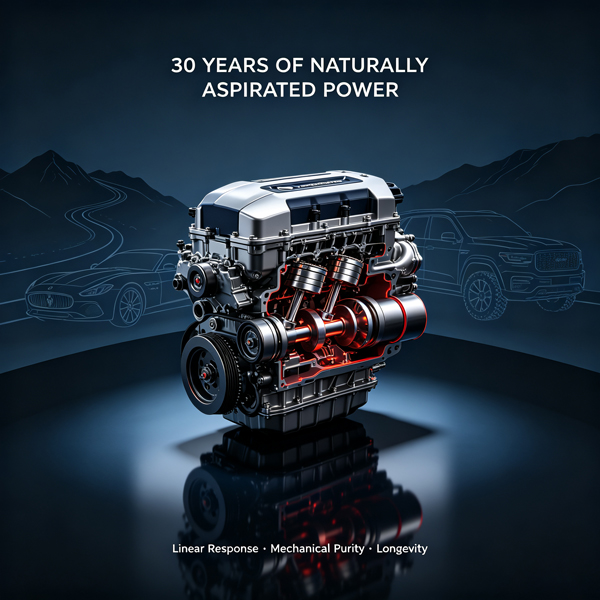
Toyota's naturally aspirated engines were never about headline peak numbers. They were about how power is delivered. Without forced induction, throttle response is immediate and linear. There's no turbo spool delay, no boost threshold to anticipate. You press the pedal, the engine breathes harder, and the revs climb in a continuous, predictable arc. That purity is what made the AE86 immortal and what makes the GR V6s beloved by owners who value predictability over theatricality.
Reliability is the other pillar. Naturally aspirated engines operate at lower cylinder pressures and temperatures than their turbocharged counterparts, reducing stress on internals, gaskets, and bearings. That's why a 1GR-FE can log 300,000 miles in a 4Runner and why a well-maintained 4A-GE still fires up in AE86s four decades after leaving the factory. The 2GR-FE's port injection eliminates the carbon buildup that haunts direct-injected engines. Simplicity breeds longevity—and longevity is exactly why these engines remain in demand long after production ends.
Keeping the Legacy Alive
As the industry pivots toward turbocharging, hybrids, and electrification, these naturally aspirated Toyota engines represent a closing chapter—one defined by mechanical purity and engineering restraint. Whether you're restoring an AE86 to its Group A glory, keeping a 4Runner on the trail, or breathing new life into a Highlander, the powerplants that defined Toyota's golden era deserve to be preserved, driven, and celebrated.

How to Identify a Quality Remanufactured Engine: 5 Critical Inspection Points
How to Choose a Reliable Auto Engine Supplier in China (2026 Guide)
Related Article